
 English
 русский
 عربى
عربىWhat Carbon Steel Seamless Pipe Is and Why It Matters
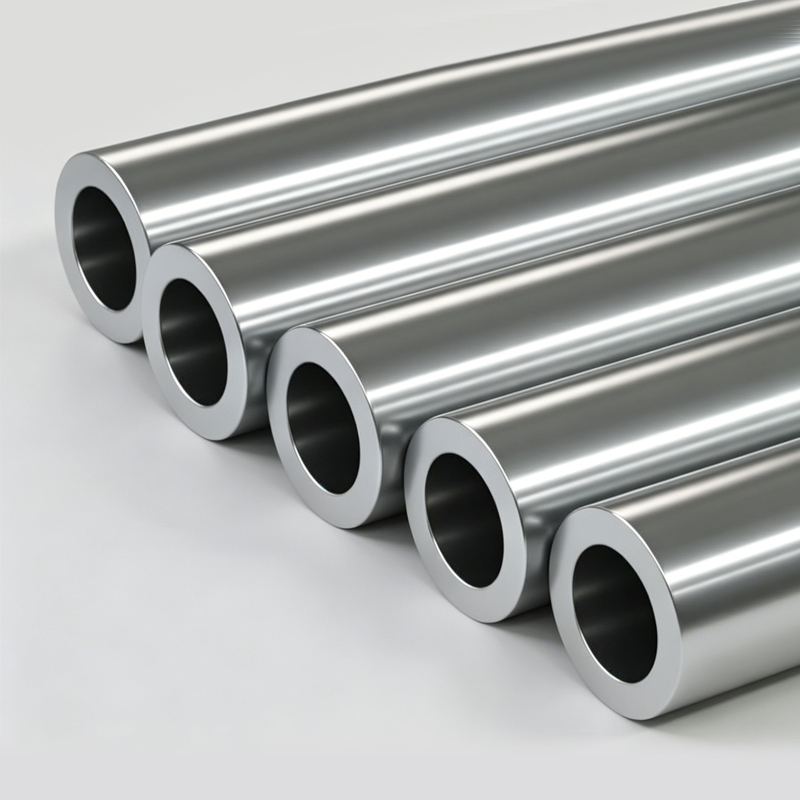
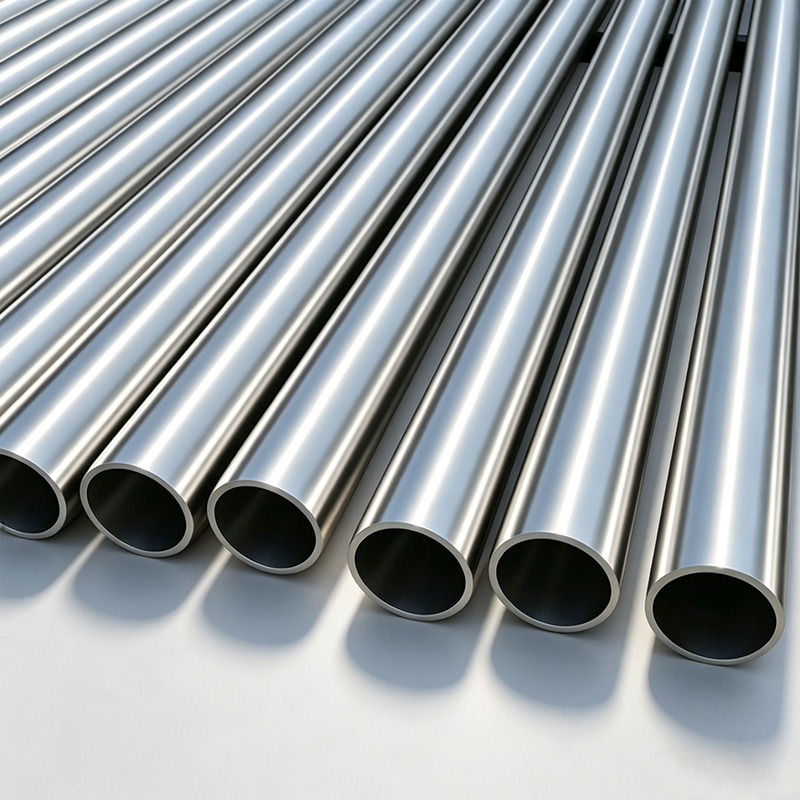
Carbon steel seamless pipe is a hollow steel cylinder manufactured without a longitudinal weld seam by hot working or cold drawing a solid steel billet through a piercing mill and subsequent rolling or drawing processes. The absence of a weld seam gives seamless carbon steel tube its defining commercial advantages: uniform mechanical properties around the full circumference, higher pressure ratings compared to equivalent-diameter welded pipe, better resistance to failure under cyclic loading and thermal stress, and greater suitability for high-pressure, high-temperature, and corrosive service conditions where weld integrity cannot be guaranteed without expensive non-destructive examination.
Seamless carbon steel is the material specification of choice for the pressure-critical piping in oil and gas production, petrochemical processing, power generation boilers and heat exchangers, hydraulic line systems, and structural load-bearing applications where dimensional consistency and metallurgical uniformity directly affect safety and service reliability.
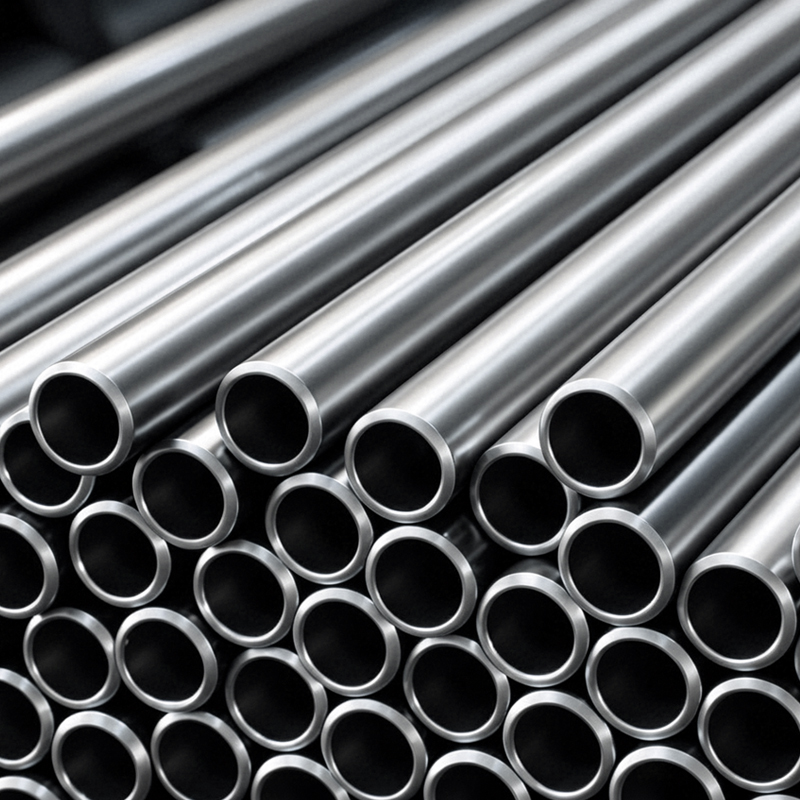
Black steel seamless pipe refers to seamless carbon steel pipe that has been left with its natural oxide (mill scale) surface from the manufacturing process rather than being treated with protective coatings, galvanizing, or bright annealing. The term black refers to the dark blue-gray to black surface appearance that the hot rolling and air cooling process leaves on the steel surface. Black steel seamless pipe is the most commonly purchased form of seamless carbon steel for oil and gas, industrial structural, and general engineering applications where the pipe will be further processed, coated, or installed in environments where the bare steel surface is acceptable.
Manufacturing Process: How Seamless Carbon Steel Tube Is Produced
Understanding how seamless carbon steel tube is manufactured clarifies why it costs more than welded pipe of equivalent dimensions and why its mechanical properties differ from welded alternatives in ways that justify the premium for demanding service conditions.
The Rotary Piercing (Mannesmann) Process
The dominant process for producing seamless carbon steel tube in modern facilities is the rotary piercing or Mannesmann process, named after the German engineers who developed it in the 1880s. The process sequence is:
- Billet selection and heating: A solid cylindrical steel billet is heated to 1,200 to 1,280 degrees Celsius in a rotary hearth or pusher furnace to achieve uniform temperature throughout the cross-section suitable for hot working.
- Rotary piercing: The heated billet is fed between two barrel-shaped work rolls set at an angle to the billet axis. This geometry causes the billet to rotate and advance simultaneously while a pointed plug or mandrel at the billet center line pierces the center to create a hollow shell (called a mother tube or bloom). The helical deformation path and the piercing action refine the grain structure and produce a seamless hollow without any longitudinal weld.
- Elongation and wall reduction: The mother tube is elongated and the wall thickness is reduced to nearer the final specification through additional rolling mills (plug mill, multi-stand mill, or pilger mill depending on the facility configuration and the target dimensions).
- Sizing and finishing: The elongated tube passes through a sizing or stretch-reducing mill to achieve the final specified outer diameter. The tube is then air-cooled on a cooling bed, creating the dark oxide scale that characterizes black steel seamless pipe before any further finishing treatment.
- Straightening, inspection, and finishing: Cooled tubes are straightened in a rotary straightener, undergo dimensional inspection (outer diameter, wall thickness, length), visual surface inspection, and any specified non-destructive examination (hydrostatic pressure test, ultrasonic testing, eddy current testing depending on the product standard requirements).
Cold Drawing Process for Small-Diameter Seamless Carbon Steel Tube
For small-diameter seamless carbon steel tube below approximately 90mm outer diameter, and for applications requiring tighter dimensional tolerances or better surface finish than hot rolling can achieve, cold drawing is used as a finishing process. A hot-rolled tube is drawn through a die (with or without an internal mandrel) at room temperature, reducing the diameter and wall thickness while simultaneously improving dimensional precision (tolerances of plus or minus 0.1% to 0.2% on outer diameter versus plus or minus 0.5% to 0.75% for hot-rolled product) and surface finish (Ra 0.4 to 1.6 micrometers versus Ra 3.2 to 12.5 micrometers for hot-rolled). Cold drawn seamless carbon steel tube is specified for precision hydraulic and pneumatic cylinder applications, instrumentation tubing, and precision structural tube where dimensional consistency is critical.
Standards and Grades for Carbon Steel Seamless Pipe: The Essential Reference
Carbon steel seamless pipe is produced to a large number of national and international product standards depending on the intended application and the markets where the product will be used. Understanding the most important standards and grades enables accurate specification, prevents misapplication of lower-specification product in demanding services, and facilitates international procurement from carbon steel seamless pipe manufacturer facilities in different countries.
ASTM Standards for Carbon Steel Seamless Pipe
The American Society for Testing and Materials (ASTM) publishes the most widely referenced standards for seamless carbon steel in North American and international oil and gas, petrochemical, and industrial markets:
- ASTM A106 Grade B and Grade C: The most widely specified standard for seamless carbon steel pipe for high-temperature service. Grade B (minimum yield 240 MPa, minimum tensile 415 MPa) is the dominant specification for hydrocarbon processing, steam lines, and general industrial pressure service. Grade C (minimum yield 275 MPa, minimum tensile 485 MPa) is used where higher strength is needed without switching to alloy steel. Carbon content for Grade B is maximum 0.30%, silicon minimum 0.10%.
- ASTM A53 Grade B: Covers both seamless and welded carbon steel pipe for pressure and mechanical applications. When seamless is specified under A53, the material and mechanical requirements are similar to A106 but without the high-temperature service designation. A53 is commonly used for general utility, mechanical, and structural applications at lower cost than A106 when high-temperature certification is not required.
- ASTM A333: Seamless and welded pipe for low-temperature service, covering six grades for service down to minus 196 degrees Celsius. Grade 6 (carbon steel, service to minus 45 degrees Celsius) and Grade 3 (Mn steel, service to minus 100 degrees Celsius) are the most commonly specified for cryogenic service piping where standard A106 does not meet the impact toughness requirements at low temperature.
- ASTM A519: Seamless carbon and alloy steel mechanical tubing for mechanical and structural applications rather than pressure service. Commonly referenced for hydraulic cylinder tubes, machinery shafting, and precision structural components.
API and ISO Standards for Carbon Steel Seamless Pipe in Oil and Gas
- API 5L (PSL1 and PSL2): The primary standard for line pipe used in natural gas and petroleum transmission pipeline systems. Covers seamless carbon steel pipe in grades from X42 to X80 (the number indicates minimum yield strength in ksi: X52 has 52 ksi minimum yield, X65 has 65 ksi minimum yield). PSL2 (Product Specification Level 2) imposes additional chemical composition limits, higher toughness requirements, and mandatory non-destructive examination not required under PSL1, and is specified for offshore and critical onshore pipeline applications.
- ISO 3183: The international equivalent of API 5L, covering line pipe for petroleum and natural gas pipelines. Most global carbon steel seamless pipe manufacturer facilities capable of supplying API 5L also hold ISO 3183 certification and can supply to either standard.
Key Carbon Steel Seamless Pipe Grades: Comparison Reference
| Standard and Grade | Min Yield (MPa) | Min Tensile (MPa) | Primary Application | Service Temperature Range |
|---|---|---|---|---|
| ASTM A106 Gr. B | 240 | 415 | High temperature process piping | Up to 480°C |
| ASTM A106 Gr. C | 275 | 485 | Higher strength pressure service | Up to 480°C |
| ASTM A53 Gr. B | 240 | 415 | General pressure and mechanical | Ambient to 260°C |
| ASTM A333 Gr. 6 | 240 | 415 | Low temperature service | Down to minus 45°C |
| API 5L Grade X52 PSL2 | 360 | 460 | Gas and oil transmission pipeline | Ambient service with toughness requirements |
| API 5L Grade X65 PSL2 | 450 | 535 | High pressure pipeline, offshore | Sour service with additional requirements |
Black Steel Seamless Pipe: Surface Finish, Characteristics, and Applications
Black steel seamless pipe is the standard delivery condition for the majority of seamless carbon steel pipe and tube produced globally. Understanding what the black finish is, what it means for the pipe's properties and handling, and what applications it is and is not suitable for prevents specification errors and misunderstandings in procurement.
What Creates the Black Surface on Black Steel Seamless Pipe
The black surface of black steel seamless pipe is mill scale: a thin layer of iron oxides (primarily magnetite Fe3O4 and wustite FeO) that forms on the steel surface during the high-temperature hot rolling and air cooling process. Mill scale is:
- Approximately 0.05 to 0.5 mm thick depending on the rolling temperature and cooling rate, firmly adherent when intact and providing a barrier against atmospheric corrosion during normal dry storage conditions
- Denser and harder than the underlying steel (approximately 500 to 600 HV versus 120 to 180 HV for the steel), which makes it effective at protecting the steel during handling and transport but also makes it abrasive to tools, dies, and surfaces it contacts
- Cathodic relative to the underlying steel in an electrochemical cell: wherever mill scale is damaged or absent, the exposed steel is the anode and corrodes preferentially, meaning that black steel seamless pipe with damaged mill scale corrodes faster at the damaged location than bare steel without any scale
For structural and general engineering applications where the pipe will be painted, coated, or used in dry interior environments, black steel seamless pipe's mill scale surface is acceptable and requires no pre-treatment beyond cleaning loose scale from cut ends before fabrication. For applications requiring welding, the mill scale in the weld zone must be removed by grinding or wire brushing to prevent porosity from the oxide entering the weld pool.
Black Steel Seamless Pipe vs Galvanized Seamless Pipe
Galvanized seamless pipe has been hot-dip galvanized (coated with a zinc layer of 45 to 85 micrometers per ASTM A53 specification) to provide corrosion protection for water, HVAC, and fire protection system applications. The key distinction between black steel seamless pipe and galvanized versions:
- Black steel seamless pipe cannot be used for potable water systems without approved internal lining or coating, because uncoated carbon steel corrodes in contact with water and introduces iron contamination into the water supply
- Black steel seamless pipe is preferred for natural gas, compressed air, steam, hydraulic, and oil service lines where the zinc from galvanizing would contaminate the fluid or where galvanizing would be removed by the high-temperature service conditions
- Black steel seamless pipe is significantly less expensive than galvanized equivalents (typically 20% to 35% lower cost) because the galvanizing process adds material, processing, and handling costs
Size Range, Wall Thickness Schedule, and Dimensional Standards
Carbon steel seamless pipe is commercially available across a very wide range of sizes, and the dimensional nomenclature can be confusing for those new to the industry because the Nominal Pipe Size (NPS) number does not correspond exactly to any actual pipe dimension in most size ranges.
Understanding Nominal Pipe Size and Schedule
The Nominal Pipe Size (NPS) system, standardized in ASME B36.10M and the governing standard for most seamless carbon steel pipe dimensions, uses a nominal designation number that approximates the pipe's outer diameter in inches for NPS 14 and above (where NPS 14 pipe has an actual outer diameter of exactly 14 inches) but departs from this for smaller sizes (NPS 1 has an actual OD of 1.315 inches, NPS 2 has an OD of 2.375 inches). The wall thickness of seamless carbon steel pipe is specified by Schedule number (Sch 20, 40, 80, 120, 160, and XXH are the most common) or by a specific wall thickness in mm or inches. Schedule 40 is the most commonly stocked schedule for utility and moderate pressure applications; Schedule 80 and above are specified for higher pressure services.
Commercial Size Range and Common Schedules
| NPS | Actual OD (mm) | Sch 40 Wall (mm) | Sch 80 Wall (mm) | Common Application |
|---|---|---|---|---|
| 1/2 inch | 21.3 | 2.77 | 3.73 | Instrumentation, hydraulic lines |
| 1 inch | 33.4 | 3.38 | 4.55 | Process plant, utilities |
| 2 inch | 60.3 | 3.91 | 5.54 | Oil and gas, high pressure service |
| 4 inch | 114.3 | 6.02 | 8.56 | Plant piping, steam distribution |
| 6 inch | 168.3 | 7.11 | 10.97 | Refinery and petrochemical |
| 12 inch | 323.9 | 9.53 | 12.70 | Large diameter process and distribution |
Carbon Steel Seamless Pipe Manufacturer: How to Evaluate and Select a Qualified Supplier
Selecting a qualified carbon steel seamless pipe manufacturer is one of the most consequential supply chain decisions for engineering contractors, EPC (engineering, procurement, and construction) companies, and industrial facilities procurement teams. The consequences of supplying substandard pipe in pressure service can range from project delays from failed inspections to catastrophic failures in operation with liability and safety implications that far outweigh the initial cost savings from choosing an unqualified supplier.
Mandatory Certifications and Quality System Requirements
A credible carbon steel seamless pipe manufacturer for serious industrial and energy sector applications must hold the following certifications and approvals:
- ISO 9001 quality management system certification: Confirms that the manufacturer has documented and audited quality management processes covering raw material receipt, production control, inspection, testing, and traceability. This is the minimum quality system baseline; it does not guarantee product quality but confirms that systematic quality management practices exist.
- Product certifications to the relevant standards: For ASTM A106, the manufacturer must be listed on a qualified producers list or provide mill test reports (MTRs) showing compliance with all compositional, mechanical, and dimensional requirements of the standard. For API 5L, the manufacturer must hold a current API monogram license for the specific PSL level and grade, which requires periodic API audits of the production facility.
- PED (Pressure Equipment Directive) approval for EU market supply: For seamless carbon steel pipe sold into EU markets for pressure equipment applications, the manufacturer must be approved under the Pressure Equipment Directive 2014/68/EU, typically demonstrated through CE marking supported by a notified body approval certificate.
- Approved vendor list status with major operators: The most credible validation for oil and gas sector supply is that the carbon steel seamless pipe manufacturer is already on the approved vendor lists of major oil companies, engineering contractors, or certification bodies (DNV, Lloyds Register, Bureau Veritas) that audit facilities and approve products for their clients' projects.
Technical Capability Indicators for Carbon Steel Seamless Pipe Manufacturer Evaluation
- Integrated steel and pipe production: A carbon steel seamless pipe manufacturer that produces its own steel billets from electric arc furnace or basic oxygen furnace steelmaking has complete control over the chemical composition of its raw material and can trace each pipe to its original heat of steel. Manufacturers that buy billets externally have less compositional control and traceability unless they implement rigorous incoming material inspection.
- In-house non-destructive examination capability: A credible manufacturer for pressure service supply must have documented, calibrated non-destructive examination equipment and trained operators for hydrostatic pressure testing, ultrasonic wall thickness testing, and (for premium specifications) full-body ultrasonic and eddy current testing. Third-party reliance for all NDE is a quality risk indicator for high-volume production.
- Heat treatment facility: The ability to normalize, anneal, or stress-relieve pipe in-house is required for many application-specific specifications. A manufacturer without heat treatment capability must outsource these operations, creating traceability and contamination risks.
- Documented size range and production capacity: Verify that the carbon steel seamless pipe manufacturer's documented production range covers the specific NPS, schedule, and material grade needed. Some manufacturers specialize in small-diameter precision tube and cannot produce large-diameter heavy-wall pipe; others focus on large-diameter structural tube and cannot achieve the dimensional precision needed for instrumentation or hydraulic tube.
Mill Test Report (MTR) Verification for Carbon Steel Seamless Pipe
The mill test report (MTR, also called material test certificate or certificate of conformance depending on the standard) is the primary documentary evidence that a specific batch of seamless carbon steel tube meets the specified standard. Every legitimate carbon steel seamless pipe manufacturer must provide an MTR showing the heat number (unique identifier for the batch of steel from which the pipes were made), the chemical composition test results for all elements required by the specified standard, the mechanical test results (yield strength, tensile strength, elongation), dimensional inspection results, and any non-destructive examination results. Before accepting any shipment of seamless carbon steel for pressure service, verify that the MTR chemistry and mechanical values are within the standard's limits, and that the heat number on the MTR matches the marking on each individual pipe or bundle. Counterfeit or inaccurate MTRs are a documented risk in the seamless pipe market, and physical verification of pipe marking against the provided MTR is essential for safety-critical procurement.
Frequently Asked Questions
1. What is the main difference between carbon steel seamless pipe and welded pipe?
The main difference between carbon steel seamless pipe and welded pipe is the presence or absence of a longitudinal weld seam. Seamless carbon steel tube is produced by hot piercing and rolling a solid billet, creating a continuous metal structure without any weld. Welded pipe is formed from flat steel plate or strip that is roll-formed into a cylinder and welded along the longitudinal seam. The weld seam in welded pipe can be a source of structural weakness, residual stress, and local metallurgical variation that is absent in seamless carbon steel. For this reason, seamless pipe is specified for high-pressure, high-temperature, and cyclic loading applications where weld integrity cannot be relied upon, while welded pipe is acceptable for lower-pressure and structural applications where cost is the primary driver.
2. What does black steel seamless pipe mean and is it ready to use?
Black steel seamless pipe refers to seamless carbon steel pipe delivered with its natural mill scale surface from the hot rolling process, without any additional surface treatment, coating, or galvanizing. The dark blue-gray to black color of the mill scale gives the product its name. Black steel seamless pipe is ready to use for most structural, mechanical, and industrial piping applications in its as-delivered condition. For applications requiring painting or external protective coating, the mill scale provides adequate substrate preparation for prime coating in most environments. For applications requiring welding, the mill scale in the weld zone must be removed before welding. Black steel seamless pipe must not be used for potable water without an approved internal lining.
3. What is ASTM A106 Grade B and when is it specified?
ASTM A106 Grade B is the most widely specified standard and grade for seamless carbon steel pipe for high-temperature service in North American and international industrial and energy markets. It requires minimum yield strength of 240 MPa, minimum tensile strength of 415 MPa, and maximum carbon content of 0.30%. A106 Grade B is specified for boiler feed water lines, steam distribution systems, hydrocarbon processing plant piping, and any application operating above approximately 200 degrees Celsius where the high-temperature certification of A106 is required and lower-temperature-only specifications like A53 would not be acceptable. It is available in NPS 1/8 inch through NPS 26 inch in Schedule 10 through Schedule XXH wall thicknesses from qualified carbon steel seamless pipe manufacturer facilities globally.
4. How does seamless carbon steel compare to alloy steel pipe for high-temperature service?
Seamless carbon steel (ASTM A106) and seamless alloy steel (ASTM A335, P11, P22, P91) serve different temperature ranges in high-pressure, high-temperature service. Carbon steel seamless pipe is appropriate for service temperatures up to approximately 450 to 480 degrees Celsius, above which creep deformation becomes significant and the material loses strength faster than the pressure design code allows. Chromium-molybdenum alloy steels (P11, P22, P91) provide substantially higher creep strength, allowing service at 550 to 650 degrees Celsius and above. For most plant piping below 450 degrees Celsius, seamless carbon steel A106 Grade B is the most cost-effective specification. Above this temperature, the premium cost of alloy steel is justified by the safety margin it provides.
5. What quality documents should a carbon steel seamless pipe manufacturer provide with each shipment?
A qualified carbon steel seamless pipe manufacturer should provide with each shipment: a mill test report (MTR) showing the heat number, chemical composition analysis results, mechanical test results (yield, tensile, elongation), and dimensional inspection results for each lot; a certificate of conformance confirming the product meets the specified standard (ASTM A106, API 5L, etc.); hydrostatic test records if hydrostatic testing was performed as part of the standard requirements; any non-destructive examination records if ultrasonic, eddy current, or other NDE was specified; and heat treatment records if normalizing or other heat treatment was applied. For API 5L PSL2 and other critical specifications, traceability records linking the pipe markings to the specific test results must also be available.
6. What is the standard length for carbon steel seamless pipe?
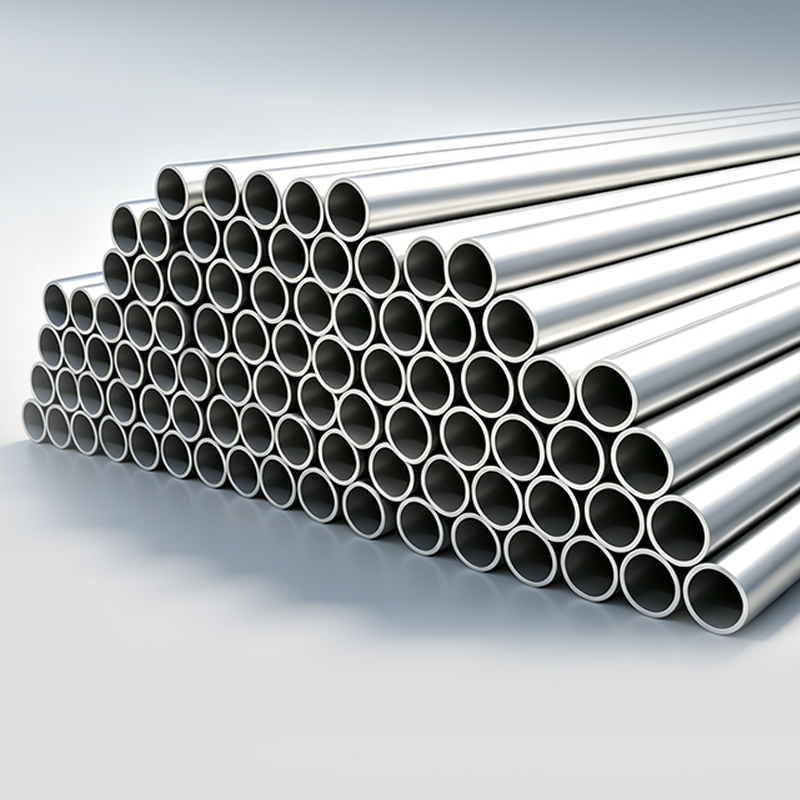
Carbon steel seamless pipe is produced and sold in random lengths, double random lengths, and defined cut lengths. Random length is the standard commercial delivery condition for most ASTM and API specifications: for A106 Grade B, random lengths are specified as 4.9 to 7.0 meters with a minimum average length of 5.5 meters per order. Double random lengths are 11 to 14 meters. Cut-to-length carbon steel seamless pipe at specific dimensions is available from most carbon steel seamless pipe manufacturer facilities at a length tolerance of plus 6 mm to minus 0 mm for standard cuts. For large diameter and thick wall pipe, minimum and maximum lengths may differ from standard small-diameter ranges, and buyers should verify the specific applicable length range for their ordered size and standard.
7. How is carbon steel seamless pipe marked for identification?
Carbon steel seamless pipe is marked per the requirements of the applicable product standard. For ASTM A106, required markings on each pipe include: the manufacturer's name or mark; the specification and grade (A106B or A106C); the schedule or wall thickness designation; the NPS or actual outer diameter; the heat number linking the pipe to its MTR; and the SMLS (seamless) designation distinguishing it from welded pipe made under the same standard. For API 5L, additional markings include the PSL level, grade designation (e.g., X52 PSL2), and the API monogram if applicable. Markings are applied by die stamping, paint stenciling, or a combination of both, with paint marking typically covering the full required information on each pipe length and die stamping sometimes limited to one end.
8. What is the difference between hot finished and cold drawn seamless carbon steel tube?
Hot finished seamless carbon steel tube is produced directly from the hot rolling mill to its final dimensions, resulting in the mill scale surface characteristic of black steel seamless pipe, wall thickness tolerance of plus or minus 10% to 12.5% typical, and outer diameter tolerance of plus or minus 0.5% to 1%. Cold drawn seamless carbon steel tube undergoes an additional cold drawing operation after hot rolling where the tube is drawn through a die at room temperature, producing tighter wall thickness tolerances of plus or minus 5% to 7.5%, tighter OD tolerances of plus or minus 0.1% to 0.2%, a bright metallic surface without mill scale, and improved roundness. Cold drawn seamless carbon steel tube is specified for hydraulic and pneumatic cylinder applications, precision mechanical components, and any application where dimensional consistency directly affects component performance.
9. How should carbon steel seamless pipe be stored to prevent corrosion?
Carbon steel seamless pipe should be stored on wooden or rubber-padded supports that keep the pipe off the ground and allow air circulation beneath the bottom tier of the stack. Storage areas should be covered or indoor whenever possible to protect from rainfall that accelerates surface rust formation on black steel seamless pipe where the mill scale has been damaged during handling. Pipe ends should be protected with plastic or metal end caps to prevent moisture and foreign material from entering the bore. Pipes should not be stored in direct contact with ground soil or concrete, which wicks moisture onto the pipe surface. For extended storage above approximately 6 months, the pipe surface should be coated with a temporary corrosion-inhibiting oil to slow rust formation. In marine or highly humid environments, additional protection including vapor corrosion inhibitor (VCI) packaging may be appropriate for long-term storage.
10. What are the advantages of sourcing seamless carbon steel from an integrated carbon steel seamless pipe manufacturer?
Sourcing from an integrated carbon steel seamless pipe manufacturer (one that produces its own steel from electric arc or basic oxygen furnace steelmaking, continuously casts billets, and then pierces and rolls pipe in the same facility or supply chain) provides several advantages over sourcing from a manufacturer that purchases billets externally. Complete heat traceability is maintained from liquid steel to finished pipe, enabling each pipe to be traced to its specific heat chemistry with documented testing. Chemical composition is controlled to the manufacturer's specification from the point of steel melting, rather than relying on the billet supplier's certification alone. Surface and internal quality anomalies related to billet segregation or inclusions are tracked internally and can be correlated with specific heats through the manufacturer's process records. For oil and gas, nuclear, and other safety-critical applications where full material traceability is mandated by the engineering specification, integrated manufacturer supply is often specifically required.