What Makes Bearing Steel Seamless Pipe Different From Standard Steel Tubes?
Bearing steel seamless pipe is a high-performance precision steel product manufactured from bearing-grade steels such as GCr15 (AISI 52100 equivalent). Its core difference from ordinary carbon steel seamless pipe lies in its extreme hardness, ultra-clean metallurgical structure, and outstanding fatigue resistance. While standard steel tubes are mainly designed for fluid transport or structural support, bearing steel seamless pipes are engineered for rolling contact, high load cycles, and long-term mechanical wear resistance.
The most critical feature of bearing steel is its high carbon and chromium content. After heat treatment, it forms a fine martensitic microstructure that provides exceptional hardness (often reaching 58–66 HRC). This allows the material to withstand repeated rolling contact stress without surface spalling or internal cracking. In contrast, standard carbon steel pipes cannot maintain stability under such conditions.
Another key difference is material purity control. Bearing steel must minimize non-metallic inclusions such as oxides and sulfides. Even microscopic impurities can become crack initiation points under high cyclic stress. Therefore, the smelting process often includes vacuum degassing or electroslag remelting to ensure structural integrity.
From an application perspective, bearing steel seamless pipes are widely used in precision mechanical systems where failure is not acceptable. This includes automotive transmissions, high-speed rotating machinery, precision guide systems, and industrial bearings.
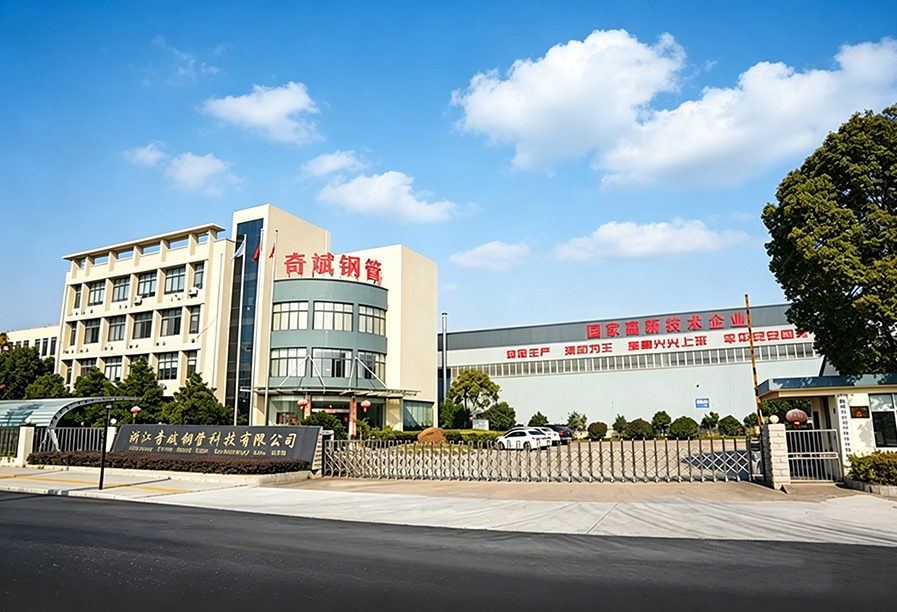
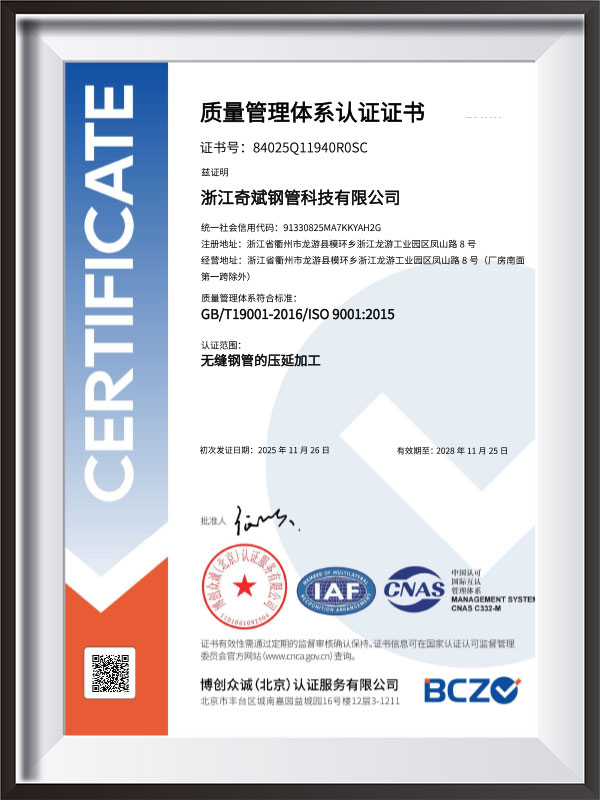
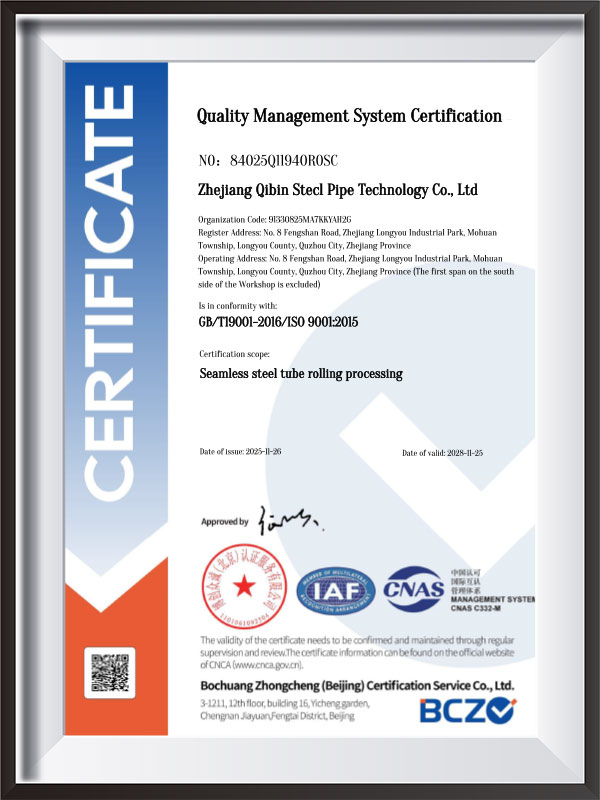
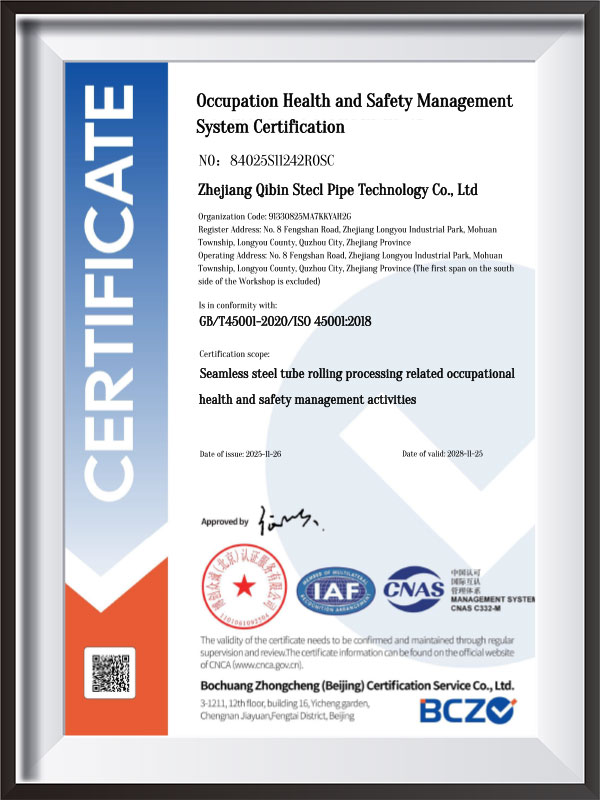
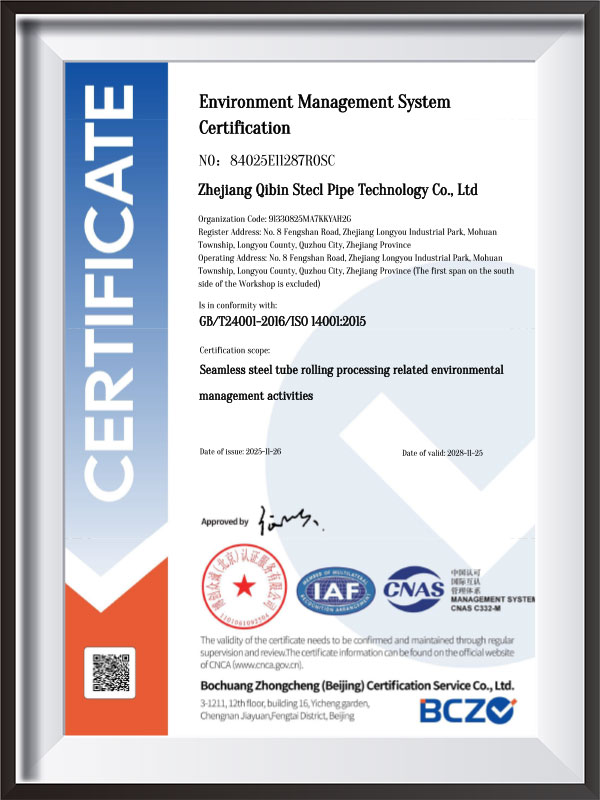
As a professional steel pipe supplier, Zhejiang Qibin Steel Pipe Technology Co., Ltd. focuses on manufacturing high-precision seamless steel pipes with strict quality control systems. The company ensures consistent mechanical properties and dimensional accuracy, making its products suitable for demanding global industrial applications.
Material Performance Comparison Table
| Property |
Bearing Steel Seamless Pipe |
Standard Carbon Steel Pipe |
| Hardness |
Very High (HRC 58–66) |
Medium |
| Fatigue Resistance |
Excellent |
Moderate |
| Wear Resistance |
Very High |
Medium |
| Purity Requirement |
Extremely Strict |
Standard |
| Main Function |
Precision mechanical use |
Fluid/structural use |
FAQ
Q1: Why is bearing steel so hard?
A1: Because of its high carbon content and heat treatment that forms a hardened martensitic structure.
Q2: Can carbon steel replace bearing steel pipes?
A2: No, because carbon steel lacks the required fatigue and wear resistance.
Q3: What role does Zhejiang Qibin Steel Pipe Technology Co., Ltd. play in production?
A3: The company produces precision seamless steel pipes with strict quality and dimensional control for industrial applications.
How Is Bearing Steel Seamless Pipe Manufactured and Controlled for High Precision?
The manufacturing process of bearing steel seamless pipe is significantly more complex than conventional steel pipe production because it requires metallurgical purity, structural uniformity, and extremely tight dimensional tolerances. Every stage of production directly affects the final fatigue life and mechanical performance.
The process begins with high-quality bearing steel billets, typically refined using electric arc furnaces followed by secondary refining processes such as vacuum degassing. This ensures the removal of harmful gases and impurities that could weaken fatigue performance.
After billet preparation, the steel is heated to a controlled temperature range before being pierced into a hollow shell. This step requires precise temperature control to avoid internal stress concentration. The hollow shell is then elongated through hot rolling or cold drawing processes to achieve required dimensions.
Heat treatment is one of the most critical stages. Through quenching and tempering, the material achieves a hardened structure with high wear resistance and controlled toughness. Improper heat treatment can lead to brittleness or reduced fatigue life.
Manufacturing Process Overview Table
| Stage |
Function |
Impact on Performance |
| Steel refining |
Remove impurities |
Improves fatigue life |
| Heating & piercing |
Form hollow structure |
Ensures uniformity |
| Rolling/drawing |
Size precision control |
Affects accuracy |
| Heat treatment |
Hardness & toughness balance |
Determines durability |
| Precision finishing |
Surface & tolerance control |
Ensures assembly fit |
Quality inspection is equally important. Advanced manufacturers use ultrasonic testing, eddy current inspection, hardness testing, and dimensional measurement to ensure every pipe meets strict industrial standards.
Zhejiang Qibin Steel Pipe Technology Co., Ltd. integrates modern production lines with advanced inspection systems to ensure stable mechanical properties and high precision. The company focuses on providing reliable seamless steel pipe solutions for global industrial customers, especially in high-performance engineering applications.
FAQ
Q1: Why is steel refining important for bearing steel?
A1: It removes impurities that can cause fatigue cracks.
Q2: What is the role of heat treatment?
A2: It determines hardness, wear resistance, and fatigue performance.
Q3: Does Qibin use advanced testing methods?
A3: Yes, ultrasonic and dimensional inspection systems are widely used.
Where Is Bearing Steel Seamless Pipe Used and How Should It Be Selected?
Bearing steel seamless pipe is widely used in industries where components must withstand continuous motion, high load cycles, and extreme wear conditions. Its unique combination of hardness and fatigue resistance makes it essential in precision engineering and high-performance mechanical systems.
In the automotive industry, it is commonly used in transmission systems, steering assemblies, drive shafts, and precision bushings. These components require stable performance under continuous vibration and stress.
In industrial machinery, bearing steel seamless pipes are used for rollers, guide sleeves, high-precision shafts, and bearing housings. These applications demand high wear resistance and dimensional stability over long operating periods.
In high-speed rotating equipment, such as turbines and precision motors, the material must maintain stability under centrifugal force and continuous friction. Even minor surface defects can lead to premature failure, making material quality extremely critical.
Application Overview Table
| Industry |
Application |
Key Requirement |
| Automotive |
Transmission components |
Fatigue resistance |
| Machinery |
Rollers & bushings |
Wear resistance |
| Precision systems |
Guide sleeves |
Dimensional accuracy |
| Heavy equipment |
Load-bearing parts |
High strength |
| High-speed systems |
Rotating components |
Surface stability |
Selection of bearing steel seamless pipe must consider hardness level, heat treatment condition, dimensional tolerance, surface finish, and expected service life. Engineers must also evaluate load frequency and lubrication conditions, as these directly affect wear behavior.
Environmental factors such as temperature and contamination also play an important role. In high-speed systems, surface roughness must be minimized to reduce friction and prevent early failure.
As a professional manufacturer, Zhejiang Qibin Steel Pipe Technology Co., Ltd. provides precision-engineered seamless steel pipe solutions tailored to demanding industrial environments. The company supports global clients with stable quality, advanced production systems, and strict inspection standards.
FAQ
Q1: What is the most important factor in selection?
A1: Fatigue resistance under cyclic load conditions.
Q2: Can bearing steel pipes be used in corrosive environments?
A2: Only with proper surface treatment or protective coatings.
Q3: Does Qibin support customized production?
A3: Yes, customized specifications are available based on engineering requirements.


 English
 русский
 عربى
عربى