 English
 русский
 عربى
Industry News
Home / News / Industry News / Seamless Stainless Steel Pipe Meaning: Definition, Grades, and Buyer Guide

What the term really means on a mill certificate, in an RFQ, and on the shop floor — and why “seamless” alone does not guarantee fitness for every pressure or corrosion duty.
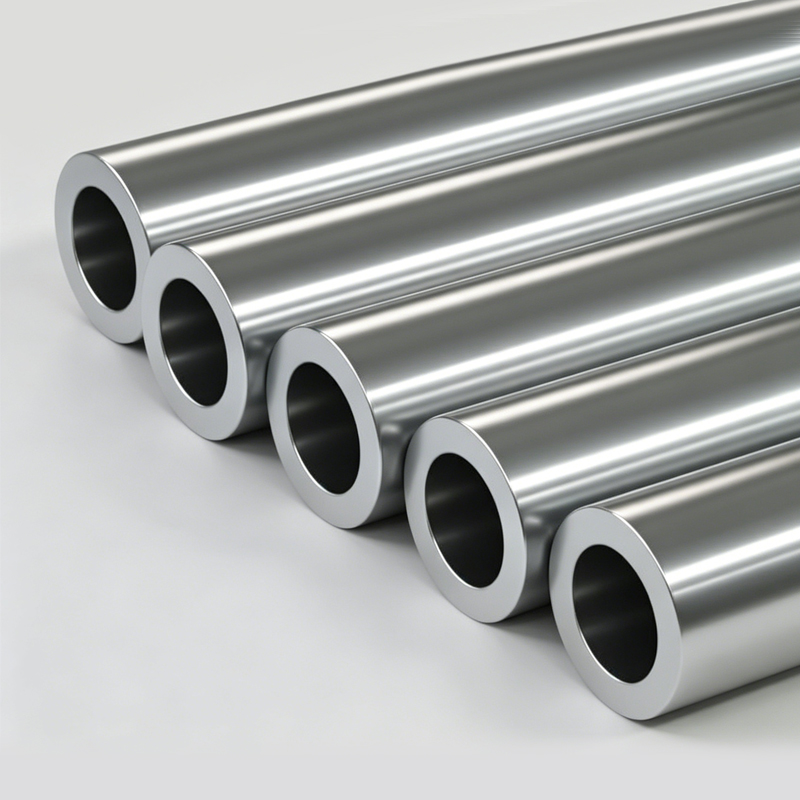
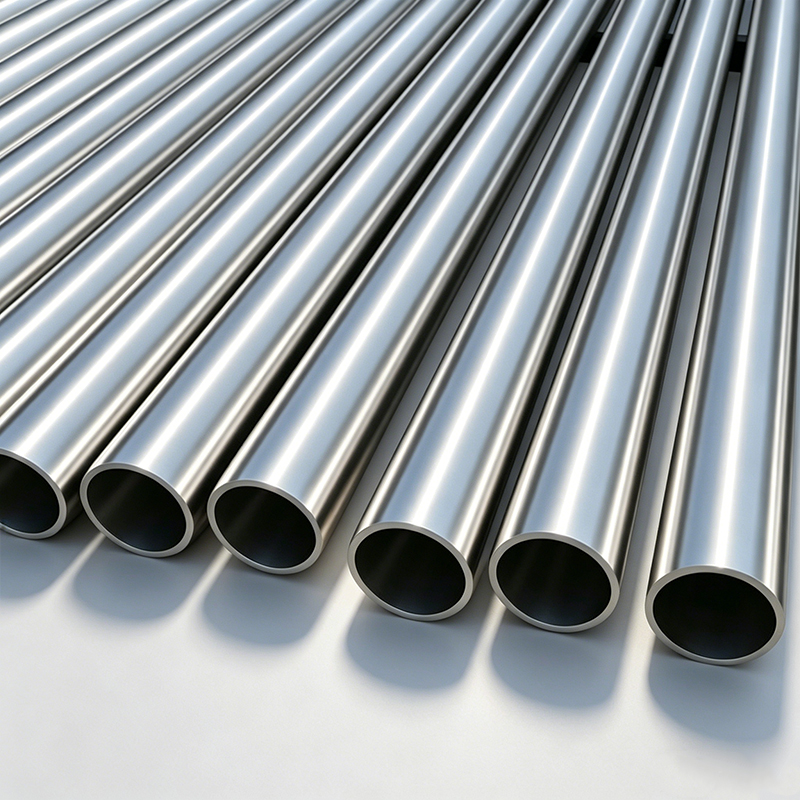
Seamless stainless steel pipe means a stainless steel tube formed as one continuous piece of metal, without a longitudinal weld. It is made by piercing a solid billet or round bar, then hot-rolling or cold-drawing the hollow shell to the required outside diameter and wall thickness. The absence of a weld seam is the defining feature. It is not a grade, not a pressure rating, and not a corrosion guarantee. Those come from the material standard, the stainless grade, the dimensions, the heat treatment, and the inspection plan.
If a supplier only says “seamless stainless steel pipe,” the practical response is to ask for the governing standard, grade, size, delivery condition, test requirements, and mill certificate. The word describes how the pipe was formed. It does not describe whether the pipe is right for a specific line, valve body, heat exchanger, or machined component.
In a welded pipe, a strip or plate is formed into a cylinder and joined along a longitudinal seam. In a seamless pipe, the metal starts as a solid billet or round bar. A piercing mill creates a hollow shell, and subsequent rolling or drawing reduces the wall and controls the diameter. There is no seam to inspect, no weld heat-affected zone, and no weld bead to remove.
The term is therefore best read as a manufacturing description. It tells the buyer that the pipe was not made from welded strip. It does not replace a standard, a grade, or a test report.
The basic sequence is well established, although details vary by mill and product size. A typical route is:
The commercial meaning of “seamless” is simple: no weld seam is introduced during forming. The engineering meaning is more demanding: the pipe must still meet the ordered grade, dimensions, tolerances, and test standard.
Cold drawing is especially important for mechanical applications because it can produce a cleaner surface, closer wall tolerance, and more consistent concentricity than a hot-finished product. That is why cold-drawn seamless pipe is common in machined parts, where the pipe becomes the raw material for further turning, milling, or grinding.
The comparison is not “seamless is always better.” It is a question of service, standard, size, cost, and inspection. A welded stainless pipe made to a recognized pressure standard and tested properly can be entirely suitable for many duties. A seamless pipe can be the better choice when the weld seam is considered an additional risk, when the size is available, or when the specification simply requires seamless construction.
| Feature | Seamless pipe | Welded pipe |
|---|---|---|
| Weld seam | None | Longitudinal seam present |
| Typical size range | Small to medium outside diameters; large sizes can be limited | Wide range, including large diameters and thin walls |
| Pressure and temperature service | Often selected for critical or cyclic service | Suitable when made and tested to the governing standard |
| Relative cost | Generally higher per unit | Generally lower for equivalent size and grade |
| Inspection focus | Wall thickness, concentricity, surface, ultrasonic or eddy current testing | Weld integrity, weld bead condition, radiographic or ultrasonic testing as specified |
| Common uses | High-pressure lines, instrumentation, heat exchangers, machined components | General piping, structural tubing, large-diameter lines, lower-risk service |
For stainless steel pipe, the grade controls corrosion resistance and mechanical behavior. Common austenitic grades include 304, 304L, 316, 316L, 321, and 347. Duplex and super duplex grades such as 2205 and 2507 are selected for higher strength and chloride resistance. The standard controls chemistry, tensile properties, hardness, permissible defects, and test methods. Examples include ASTM A312, ASTM A269, ASTM A213, EN 10216, and GB/T 14976, depending on the market and application.
Two pipes can both be called seamless stainless steel pipe and still behave very differently. One may be 304 made to a general corrosion standard; another may be 316L made to a high-pressure standard with eddy current testing and a full mill certificate. The phrase “seamless stainless steel pipe meaning” is therefore incomplete without the grade and standard attached to it.
Not every machined part needs stainless steel. In electric tool components, automotive and motorcycle parts, and general machinery, carbon and alloy steel seamless pipes often provide the required strength, machinability, and wear resistance at a lower material cost. The same forming principle applies: the pipe is produced as a one-piece hollow body without a weld, then cold-drawn to the ordered size and condition.
For general machining, 45 carbon steel seamless pipe is a common choice where higher strength than low-carbon steel is useful and corrosion resistance is not the main concern. Where higher hardenability, toughness, or load capacity is needed, 20Cr and 20CrMo alloy steel seamless pipes are used for components that will be quenched, tempered, or otherwise heat-treated.
These are not stainless grades, so the buyer should compare them against the actual service conditions. If the part sees moisture, chemicals, or a corrosive atmosphere, stainless may be necessary. If the part is oiled, painted, or used in a dry mechanical assembly, a cold-drawn carbon or alloy seamless pipe can be the more practical and economical raw material.
An RFQ for seamless stainless steel pipe should be explicit enough that the supplier cannot substitute a different route, grade, or condition without detection. The following details should be stated, even if some remain open for the supplier to propose:
On receipt, the buyer should verify that the pipe marking, mill certificate, and actual material agree. The certificate should show the heat number, grade, chemical composition, tensile properties, and the tests performed. For stainless steel, positive material identification can confirm that the supplied grade matches the ordered grade. Dimensional checks should cover outside diameter, wall thickness, length, straightness, and end condition.
A common misunderstanding is that seamless pipe is always stronger than welded pipe. Strength depends on grade, wall thickness, heat treatment, and design conditions, not on the word “seamless” alone. Another misunderstanding is that stainless steel pipe is always corrosion-proof. Corrosion resistance depends on the alloy, surface condition, temperature, chloride level, and the chemical environment.
For machined components, the value of a seamless pipe is not only the absence of a weld. It is also the consistency of the wall, the surface finish, and the dimensional accuracy that allow the pipe to be turned, drilled, milled, or ground into a finished part with predictable material removal. Cold-drawn seamless pipe is often selected when the part requires a clean surface, tight tolerance, and reliable machinability.
Spring steel and bearing steel grades serve different mechanical duties. Where the finished part must store or release elastic energy, 60Si2Mn spring steel seamless pipe is used as a raw material for springs and elastic elements. Where wear resistance and hardness are important, bearing steel seamless pipe is a separate product family. Each grade carries its own heat treatment and machining requirements, so the ordering description should include the intended process and final property targets.
In all of these cases, the seamless forming route gives the machinist a one-piece tube, but the grade and condition determine how the tube behaves in cutting, heat treatment, and final service.
Seamless stainless steel pipe means a stainless steel pipe made as one continuous piece without a welded seam. It is produced from a solid billet or bar by piercing, rolling, and often cold drawing. That definition is useful, but it is only the beginning of a correct purchase specification.
For any real project, the meaning must be completed with the standard, grade, dimensions, delivery condition, heat treatment, testing, and documentation. If the application needs corrosion resistance, confirm the stainless grade and environment. If the application is mechanical and non-corrosive, consider the same seamless logic in carbon, alloy, spring, or bearing steel grades. In every case, the word “seamless” describes how the pipe is made — not whether it is the right pipe for the job.

Seamless Piping Specification Seamless Stainless Steel Pipe Standards: A Buyer'...
Read MoreSeamless Stainless Steel Pipe Schedule: What the Callout Really Fixes A schedul...
Read MoreTrade Classification · Seamless Steel Pipe The Seamless Stainless Steel Pipe HS...
Read MoreSteel Pipe Specification · Tolerance Engineering Seamless Stainless Steel Pipe...
Read More

 No. 8, Fengshan Road, Industrial Park, Mohuan Township, Longyou County, Quzhou City, Zhejiang Province, China.
 +86-18857033688
 postmaster@zj-qibin.com

