 English
 русский
 عربى
Industry News
Home / News / Industry News / Seamless Stainless Steel Pipe Standards: How to Specify Grades, Tolerances, and Tests

Seamless Piping Specification
A practical walk through the grades, dimensions, tolerances, and tests behind every confident seamless pipe order.
The purchase order calls for ASTM A312. The grade is 316L. The mill certificate arrives with a heat number, a chemical analysis, and a tidy row of test results. Everything looks correct, yet the pipe still fails during fabrication. Before blaming the mill, ask whether the standard you specified actually required the tests, tolerances, and heat-treatment record the application needed.
A pipe standard is not a formality. It is a technical contract covering chemistry, dimensions, mechanical properties, and testing — the only reliable link between a marketing claim and a delivered product.
For engineers, purchasing managers, and quality teams who buy seamless pipe for mechanical or process service, knowing which standard applies — and where it leaves room for interpretation — is the difference between a clean order and an expensive lesson.
A grade such as 304 or 316 identifies a family of chemical compositions, but it says nothing about how the pipe was made, what tolerances were held, whether it was solution annealed, or which tests were run. Two pipes with the same grade marking can behave very differently if they were produced to different specifications.
A well-written standard does five jobs at once. It fixes the permitted composition range. It defines the manufacturing route, including whether the pipe must be seamless. It sets dimensional tolerances. It prescribes heat treatment. And it lists the tests that must be passed before release.
The first question in any procurement discussion should therefore be not "what grade?" but "to which standard?" The grade names the material. The standard defines everything else.
Four specification families dominate global purchases of seamless stainless steel pipe. Their boundaries overlap, and the right choice depends on the fluid, pressure, temperature, and fabrication steps that will follow.
| Standard | Scope | Typical Use | What It Emphasizes |
|---|---|---|---|
| ASTM A312 | Seamless and welded austenitic stainless steel pipe | Process piping and pressure service | Hydrostatic testing, flattening, tensile and hardness requirements |
| ASTM A269 | Seamless and welded austenitic stainless steel tubing | Small-diameter instrument and hydraulic lines | Tighter diameter tolerances, general-service focus |
| ASTM A511 | Seamless stainless steel mechanical tubing | Machined shafts, cylinders, and components | Ordered to diameter and wall, or to a machined dimension |
| EN 10216-5 | Seamless stainless steel tubes for pressure purposes | Pressure equipment in the European market | Documentation and non-destructive testing per EN 10204 |
| GB/T 14976 | Seamless stainless steel tubes for fluid transport | General fluid lines in the Chinese market | Composition, mechanical tests, optional hydrostatic or eddy-current checks |
For machined components rather than pressurized systems, a mechanical tubing standard is often a better fit than a pressure-pipe standard. For critical process lines, the pressure-service specification remains the safer default.
Within each standard, the alloy grade controls corrosion resistance, strength at temperature, and weldability. General service relies on 304 and 316; the L grades add a low-carbon limit that stops chromium carbide from precipitating at grain boundaries during welding. That distinction matters when the pipe will be welded and then exposed to aggressive media.
Stabilized grades such as 321 and 347 take a different approach. Titanium or niobium additions lock up the carbon, so intergranular corrosion does not develop in elevated-temperature service. Specify them when the pipe will run in the temperature range where carbide precipitation would otherwise be a real risk.
Heat treatment is equally prescriptive. Austenitic stainless steel pipe is normally supplied in the solution-annealed condition, heated and rapidly quenched so carbides remain dissolved. The mill certificate should state the annealing temperature and method, because pipe that skipped proper annealing will underperform in service no matter how clean the chemistry looks on paper.
Material standards work alongside dimensional rules. ASME B36.19 covers stainless steel pipe; ASME B36.10 covers carbon steel. Together they define nominal pipe sizes, outside diameters, and wall thickness series — the familiar SCH 10S, SCH 40, and SCH 80 designations.
Standards also grant tolerances, and this is where careful buyers become cautious. A pipe ordered to ASTM A312 carries a permitted minus tolerance on wall thickness. At the minimum permitted wall, the pipe still conforms to the standard, but a design calculated on the nominal wall may lose its intended safety margin.
For machined parts, eccentricity often matters more than average wall thickness. Seamless pipe is never perfectly concentric, and the tolerance class you choose determines how much machining stock must remain before the bore cleans up.
A certificate is only as valuable as its traceability. A proper mill test certificate ties chemistry, tensile results, and non-destructive testing to a specific heat number and a defined batch. Documents that quote typical values, or list a grade without a heat number, prove very little.
The tests worth asking for are straightforward:
Positive material identification on the delivered lot provides independent confirmation that you received the grade you paid for, not a lower-cost substitute with a similar marking.
None of this logic is unique to stainless steel. In machinery manufacturing, the same discipline — grade plus standard plus traceable testing — decides whether a carbon or alloy steel seamless pipe is fit for service. The grade names carry the same meaning across the material range: 20 and 45 are carbon structural steels; 20Cr, 20CrMo, and 40Cr are alloy structural steels with predictable hardening response; 60Si2Mn designates spring steel.
Cold-rolled seamless pipe is the production route that delivers the tighter tolerances and cleaner surface that machining operations need. The same decision framework is laid out in our engineering article on seamless steel tube types, specifications, and how to choose the right one.
Zhejiang Qibin Steel Pipe Technology operates 21 cold-rolling lines and supplies cold-rolled seamless pipe in carbon, alloy, spring, and bearing steel grades for electric tool components, automotive and motorcycle parts, and general machined parts.
When the application demands dependable hardenability after heat treatment, the 40Cr grade is a familiar starting point.
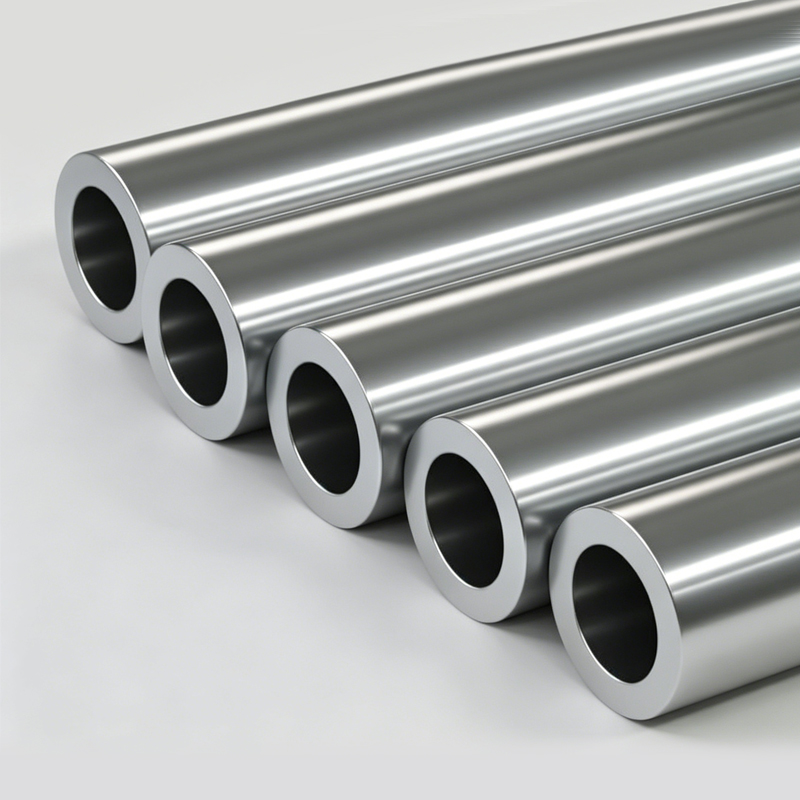 40Cr Alloy Seamless Steel Pipe for Machinery ApplicationsThis quenched and tempered 40Cr seamless pipe offers dependable hardenability and high mechanical strength, making it a practical choice for machinery components that require toughness after heat treatment.View Product →
Where moderate temperature or dynamic loads are present, 20CrMo provides a well-established balance of toughness and wear resistance.
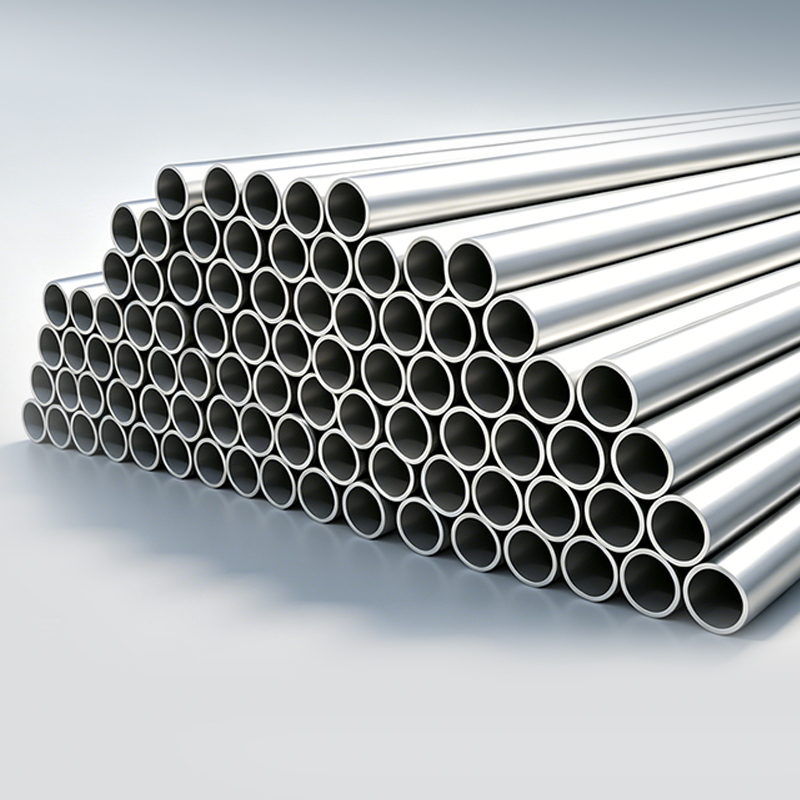 20CrMo Alloy Steel Seamless Pipe with High-Temperature StrengthWith molybdenum for creep resistance and good hardenability, this 20CrMo pipe suits elevated-temperature and dynamic-load uses where a tough core and wear-resistant surface are needed.View Product →
For general structural duty, medium-carbon 45 steel combines strength with straightforward machinability.
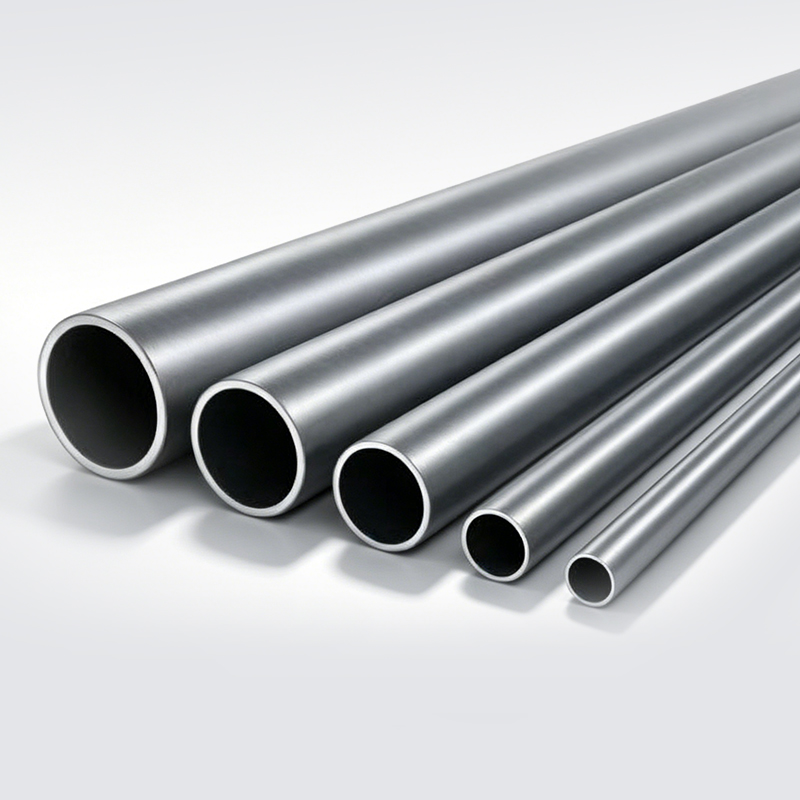 45# Carbon Steel Seamless Pipe for Structural and Industrial UseThis medium-carbon seamless pipe balances strength with machinability, supporting general structural duties in construction, oil, gas, and chemical engineering under demanding conditions.View Product →
Before you sign, run the order against five questions:
Standards exist to make quality auditable rather than assumed. When every dimension, composition, and test result on a certificate traces back to a published requirement, the pipe in your workshop is no longer an article of faith — it is an engineered component with a documented history. Zhejiang Qibin Steel Pipe Technology, a cold-rolled seamless steel pipe manufacturer, applies this standard-led approach to every carbon, alloy, spring, and bearing steel pipe it produces.



Seamless Stainless Steel Pipe Schedule: What the Callout Really Fixes A schedul...
Read MoreSeamless Stainless Steel Pipe Meaning: A One-Piece Tube Without a Weld What th...
Read MoreSeamless Pipe Engineering Seamless Stainless Steel Pipe Pressure Rating: Not a ...
Read MoreSteel Pipe Specification · Tolerance Engineering Seamless Stainless Steel Pipe...
Read More

 No. 8, Fengshan Road, Industrial Park, Mohuan Township, Longyou County, Quzhou City, Zhejiang Province, China.
 +86-18857033688
 postmaster@zj-qibin.com

