 English
 русский
 عربى
Industry News
Home / News / Industry News / Seamless Stainless Steel Pipe Pressure Rating: How to Calculate It Safely

Seamless Pipe Engineering
A seamless stainless steel pipe pressure rating is a calculated design value, not a fixed number printed on the pipe. Engineers and buyers need to understand how it is derived before choosing a schedule, comparing quotes, or signing off on a material substitution.
Once the material grade, outside diameter, wall thickness, and service temperature are fixed, the pressure rating becomes a number that can be verified, documented, and defended.
Barlow's formula gives a first estimate: P = 2St divided by D. P is the internal pressure, S is the allowable stress of the material at the design temperature, t is the wall thickness, and D is the outside diameter.
For process piping, the ASME B31.3 code follows the same stress logic with two additional inputs: joint efficiency E and a coefficient Y. For seamless pipe, E is usually 1.0, which is one reason seamless construction has a structural advantage in pressure design. The code formula is best written as P = 2SEt divided by D minus 2Yt. The result is an allowable working pressure, not a burst test number.
If you are new to how these products are made, the cold-rolled seamless pipe process explains why the absence of a longitudinal seam creates a cleaner stress path through the wall.
Info: The calculated pressure rating is an allowable working pressure for a stated condition. It is always lower than the actual burst pressure and must never be treated as a safety margin.
When comparing quoted ratings, ask for the full basis: material, wall thickness, outside diameter, temperature, and corrosion allowance. A number quoted without those inputs is not a complete specification.
If a stainless steel design begins to look oversized, an alloy steel seamless pipe with a higher allowable stress can sometimes reduce the required wall thickness. The pressure formula remains the same; only the material inputs change.
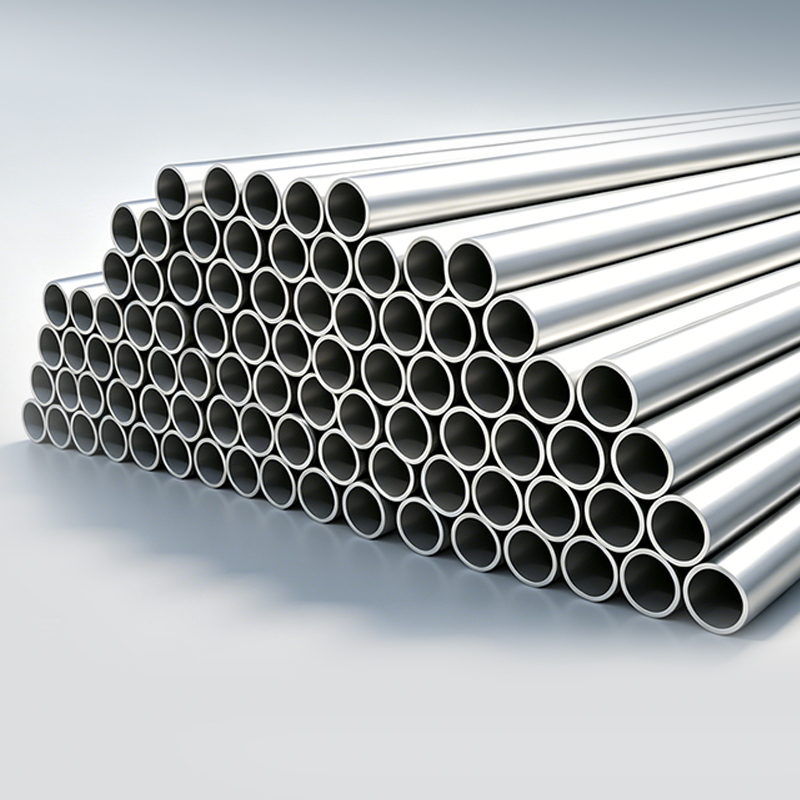 20CrMo Alloy Steel Seamless Pipe for High-Temperature Pressure ServiceThis alloy steel pipe offers better high-temperature strength and creep resistance than carbon steel, making it a candidate when wall thickness must be reduced without lowering the pressure rating.View Product →
Stainless steel pipe dimensions are grouped by schedule using ASME B36.19. The table below compares common schedules for NPS 2 seamless Type 304/316 stainless steel at ambient temperature, using an allowable stress of 20,000 psi.
| Schedule | Wall thickness (in.) | Approx. pressure rating (psi) |
|---|---|---|
| 5S | 0.065 | 1,120 |
| 10S | 0.109 | 1,910 |
| 40S | 0.154 | 2,740 |
| 80S | 0.218 | 3,960 |
Success: Wall schedule is a practical design lever. If a stainless steel line is close to its pressure limit, moving to the next heavier schedule can often solve the problem without changing the material grade.
Warning: A schedule number is not a pressure rating. Schedule 40S in one nominal size has a different rating from Schedule 40S in another size because the outside diameter changes.
Stainless steel is often selected for corrosion resistance, cleanliness, or high-temperature capability, but it is not the only seamless pipe material used in pressurized systems. Carbon steel remains a practical choice for clean water, oil, and general mechanical service. Alloy steel grades become useful when higher strength or reduced wall thickness is required.
The calculation approach does not change. Confirm the material certificate, use the correct allowable stress, subtract any corrosion loss, and calculate with the actual outside diameter and minimum wall thickness. The grade name only matters because it determines the values entered into the formula.
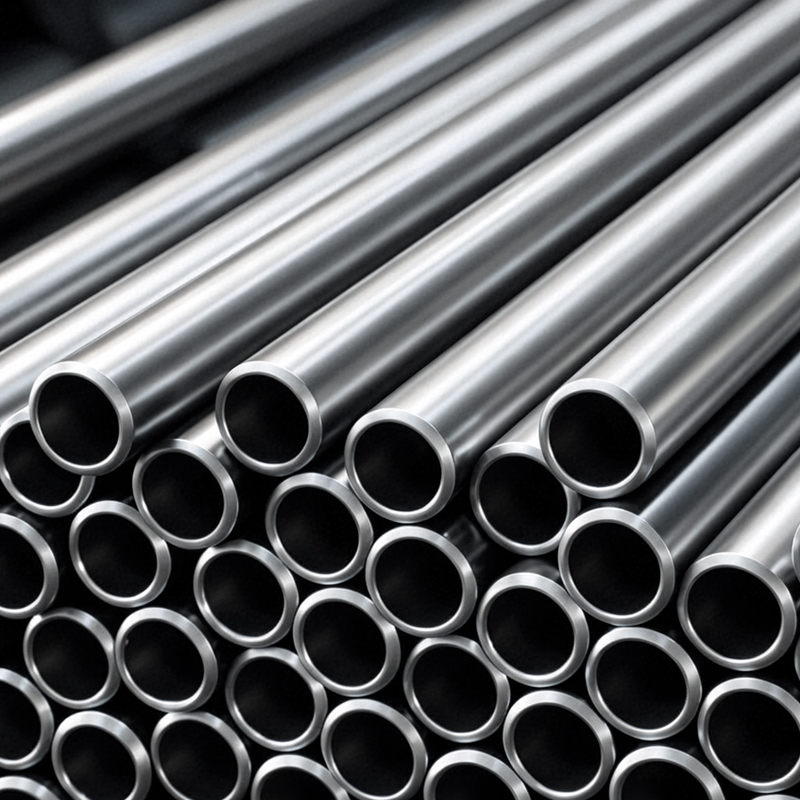 20# Carbon Steel Seamless Pipe with Customizable DimensionsA versatile seamless carbon steel pipe suited for oil, gas, chemical, and construction use. Its traceable grade and consistent dimensions make it a reliable choice when verifying pressure calculations.View Product →
For a buyer, the real question is whether the supplier can provide traceable material, consistent dimensions, and a clear manufacturing basis. A quoted pressure rating is only trustworthy when the pipe behind it has a verified steel grade and a controlled cold-rolling or finishing process.
Not every pressure envelope is a long pipe run. Cylinder bodies, valve blocks, hydraulic sleeves, and mechanical housings are often machined from seamless tube. The same diameter-to-wall relationship governs the design, but machining removes material, so the finished wall after machining must be used for the final rating calculation.
In those applications, uniformity and machinability matter as much as the code formula. A seamless tube with a consistent cold-rolled structure gives a more predictable starting point for components that will face pressure, fatigue, and repeated assembly.
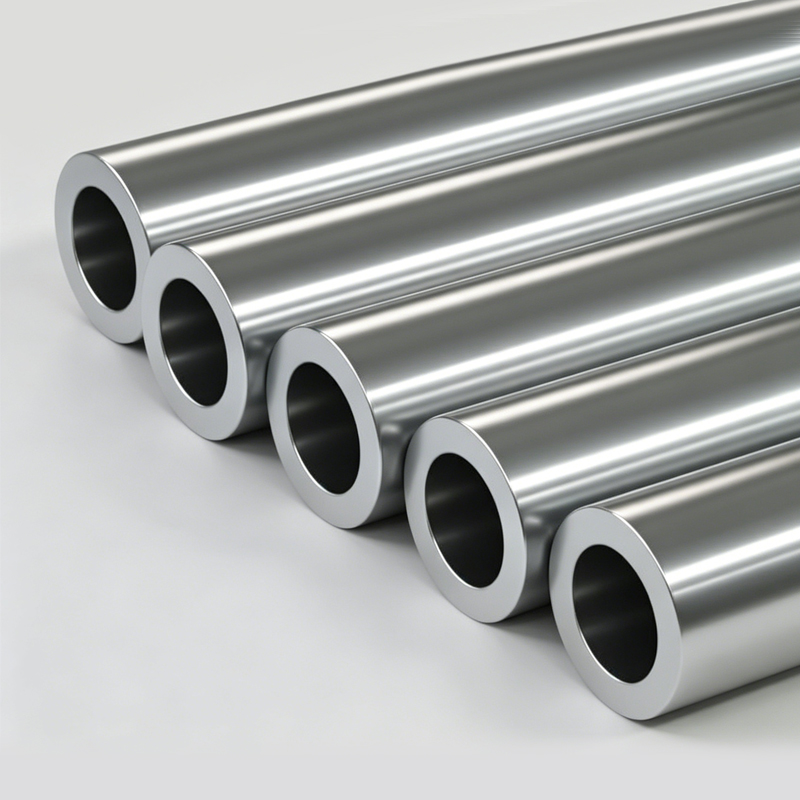 40Cr Alloy Seamless Steel Pipe for Machinery ComponentsQuenched and tempered 40Cr pipe provides high strength, low-temperature toughness, and tight dimensional accuracy, suitable for machined parts that must handle fatigue and repeated assembly.View Product →
Danger: Test pressure is a temporary quality check, not an operating limit. A line hydrostatically tested at 1.5 times its design pressure must not be run at that pressure after commissioning.
Review the material certificate for the heat number, chemical composition, mechanical properties, and test results. A quotation that simply says “stainless steel seamless pipe” is not yet a sound technical basis. The safest procurement habit is to insist on the full calculation basis behind every pressure rating.
Every seamless stainless steel pipe pressure rating is a snapshot of one material at one temperature with one effective wall thickness. It is useful only when the inputs are known, documented, and compatible with the service conditions.
For engineers, the practical habit is to fix the material and operating conditions first, then calculate the maximum allowable working pressure. For buyers, the habit is to ask for the calculation basis rather than relying on a schedule name. When both habits are in place, the pipe becomes a predictable and reliable part of the pressure system.




Seamless Stainless Steel Pipe Schedule: What the Callout Really Fixes A schedul...
Read MoreSeamless Piping Specification Seamless Stainless Steel Pipe Standards: A Buyer'...
Read MoreSeamless Stainless Steel Pipe Meaning: A One-Piece Tube Without a Weld What th...
Read MoreThe right seamless steel tube for your project is determined by four factors, i...
Read More

 No. 8, Fengshan Road, Industrial Park, Mohuan Township, Longyou County, Quzhou City, Zhejiang Province, China.
 +86-18857033688
 postmaster@zj-qibin.com

