 English
 русский
 عربى
عربىIndustry News
Home / News / Industry News / What is the difference between carbon steel seamless pipe and stainless steel seamless pipe?

Materials & Engineering — Editorial
A close reading of composition, strength, corrosion behavior, and cost — the differences that decide which pipe belongs in your next project.
The main difference between carbon steel seamless pipe and stainless steel seamless pipe lies in their chemical composition and, as a result, their corrosion resistance, strength, and cost. Carbon steel seamless pipe is made primarily of iron and carbon, offering high mechanical strength and lower cost, but it is prone to rust and corrosion when exposed to moisture or chemicals without protective coating. In contrast, a seamless stainless steel pipe contains a significant amount of chromium (typically 10.5% or more), along with nickel and other alloying elements, which gives it excellent corrosion resistance, a smoother finish, and better performance in high-temperature or high-purity environments. Because of these differences, carbon steel seamless pipe is generally chosen for structural, mechanical, and general fluid transport applications, while stainless seamless pipe is selected for food processing, pharmaceutical, chemical, and marine environments where hygiene and corrosion resistance are critical.
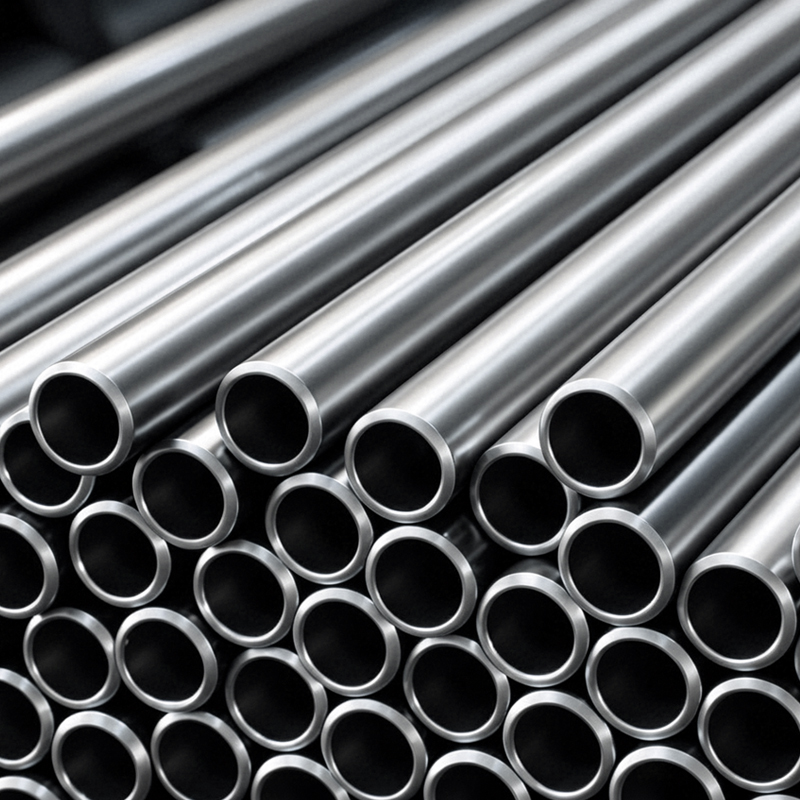
Carbon steel seamless pipe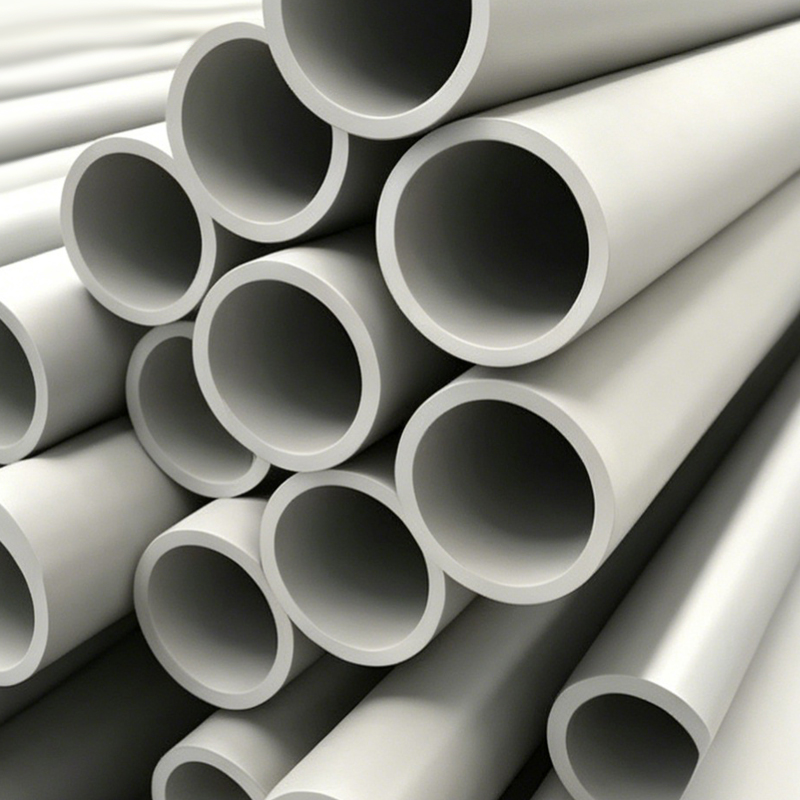
Understanding these distinctions helps buyers and engineers select the right pipe for their specific project requirements, balancing performance needs against budget constraints. The rest of this article breaks down the differences in more detail, covering composition, mechanical properties, manufacturing, applications, and cost considerations.
Material selection is rarely about which pipe is "better" — it is about which pipe survives the environment it is placed in.
Carbon steel seamless pipe is primarily composed of iron and carbon, with carbon content typically ranging from 0.05% to 0.30% depending on the grade. Small amounts of manganese, silicon, and other trace elements may be added to improve strength and workability, but the alloy content remains low. This composition gives carbon steel pipe good tensile strength and ductility at a relatively low material cost.
A seamless stainless steel pipe, on the other hand, contains a much higher percentage of alloying elements. Chromium content of at least 10.5% forms a passive oxide layer on the surface, which is the primary reason stainless steel resists rust and corrosion. Many stainless seamless pipe grades also include nickel (ranging from 6% to over 20% in some grades), molybdenum, and nitrogen, which further enhance resistance to pitting, crevice corrosion, and high-temperature oxidation.
| Element | Carbon Steel Seamless Pipe | Seamless Stainless Steel Pipe |
|---|---|---|
| Carbon | 0.05% – 0.30% | Below 0.08% (typical) |
| Chromium | Minimal or none | 10.5% – 26% |
| Nickel | Minimal or none | 0% – 22% |
| Corrosion Resistance | Low without coating | High |
Corrosion resistance is perhaps the most significant practical difference between these two pipe types. Carbon steel seamless pipe will rust when exposed to moisture, oxygen, or corrosive chemicals unless it is protected with coatings such as paint, galvanization, or epoxy lining. Even with protective coatings, any scratch or damage to the surface can expose the underlying metal to corrosion, which may shorten service life in harsh environments.
A stainless seamless pipe naturally resists corrosion due to its chromium oxide layer, which is self-healing when scratched or damaged, as long as oxygen is present to reform the passive layer. This makes seamless stainless steel pipe particularly suitable for outdoor installations, marine environments, chemical processing plants, and any application involving contact with water, acids, or salts.
In environments without significant moisture or chemical exposure, carbon steel seamless pipe with appropriate coating can perform reliably for decades, making it a cost-effective choice when corrosion risk is low.
Passive chromium oxide layers on stainless steel are typically only a few nanometers thick, yet they are the entire reason the material resists rust in demanding environments.
In terms of raw mechanical strength at room temperature, carbon steel seamless pipe often has a higher yield strength than many common grades of stainless steel, making it well suited for structural applications, load-bearing frameworks, and high-pressure piping systems where strength-to-cost ratio matters most.
However, when it comes to high-temperature performance, seamless stainless steel pipe generally outperforms carbon steel. Stainless steel maintains its mechanical properties at elevated temperatures better than carbon steel, which can lose strength and become more susceptible to oxidation scaling above certain thresholds. This makes stainless seamless pipe the preferred choice for applications involving steam lines, furnace components, and high-temperature chemical processing.
| Property | Carbon Steel Seamless Pipe | Seamless Stainless Steel Pipe |
|---|---|---|
| Room Temperature Strength | High | Moderate to High |
| High-Temperature Stability | Moderate | High |
| Low-Temperature Ductility | Can become brittle | Retains ductility |
| Oxidation Resistance | Low | High |
Carbon steel can become brittle in low-temperature service. Cold climates or cryogenic applications warrant a closer look at ductility before specifying carbon steel.
Both carbon steel seamless pipe and seamless stainless steel pipe are produced using similar core manufacturing methods, typically involving a solid round billet that is heated and pierced to form a hollow tube, followed by rolling or drawing to achieve the desired diameter and wall thickness. This seamless process eliminates the weld seam found in welded pipe, resulting in more uniform strength around the circumference and better performance under pressure.
However, stainless steel requires more precise temperature control during hot working due to its higher alloy content and different deformation behavior compared to carbon steel. The piercing and rolling temperatures for a stainless seamless pipe are generally higher, and the equipment must be capable of handling the increased hardness and work-hardening tendencies of stainless alloys. This added complexity in production is one reason stainless steel pipe commands a higher price than carbon steel pipe of comparable size.
Carbon steel seamless pipe is widely used in oil and gas pipelines, structural construction, boiler tubing, mechanical equipment, and general fluid transport where corrosion exposure is limited or where external protective coatings can be applied. Its high strength and lower cost make it the practical choice for large-scale infrastructure projects.
A seamless stainless steel pipe is commonly specified in industries where hygiene, corrosion resistance, or high-temperature performance is essential. Typical applications include food and beverage processing lines, pharmaceutical manufacturing, chemical plants, marine equipment, and heat exchangers. In these settings, the added cost of stainless seamless pipe is justified by reduced maintenance, longer service life, and compliance with strict sanitary or safety standards.
Matching pipe grade to the actual service environment — rather than defaulting to the strongest or most resistant option — is the most reliable way to control lifetime cost.
Cost is often the deciding factor when choosing between these two pipe types. Carbon steel seamless pipe is significantly less expensive per unit length than stainless seamless pipe, primarily due to the lower cost of raw materials and simpler production requirements. For projects with large volume requirements and limited corrosion exposure, carbon steel offers strong value.
That said, the total cost of ownership should also factor in maintenance, coating renewal, and replacement frequency. In corrosive or high-temperature environments, a seamless stainless steel pipe may have a higher upfront cost but a much longer service life with minimal maintenance, which can make it more economical over the long term. Buyers should evaluate the specific operating environment, expected service life, and maintenance budget before deciding purely on initial purchase price.
Choosing carbon steel purely on upfront price in a corrosive environment often leads to premature failure, unplanned downtime, and replacement costs that exceed the original savings.
Selecting between carbon steel seamless pipe and stainless seamless pipe depends on several practical factors. Consider the following before making a final decision:
For projects where corrosion resistance, temperature stability, or hygiene are top priorities, a seamless stainless steel pipe is generally the better investment despite its higher initial cost. For general industrial, structural, or fluid transport applications where budget efficiency matters most and corrosion exposure is manageable, carbon steel seamless pipe remains a reliable and cost-effective solution. Consulting with a materials engineer or pipe supplier who understands the specific operating conditions of your project can help ensure the correct pipe type is selected, avoiding costly failures or premature replacement down the line.
Carbon steel seamless pipe and seamless stainless steel pipe are both built through the same fundamental seamless process, but they diverge sharply in what they can withstand. One trades resistance for economy; the other trades economy for longevity. The right choice is never the stronger material in the abstract — it is the material that matches the exact conditions the pipe will live in for the next twenty years.

Materials & Manufacturing A single billet, pierced and drawn into form — no...
Read MoreApplications & Sectors From wellbores three miles underground to superheate...
Read MorePiping Engineering · Materials Comparison Seamless construction removes the sin...
Read MoreWhat Carbon Steel Seamless Pipe Is and Why It Matters Carbon steel seamless pi...
Read More

 No. 8, Fengshan Road, Industrial Park, Mohuan Township, Longyou County, Quzhou City, Zhejiang Province, China.
 +86-18857033688
 postmaster@zj-qibin.com

