
 English
 русский
 عربى
عربىPiping Engineering · Materials Comparison
Seamless construction removes the single most common failure point in pressurized systems — but that doesn't mean welded pipe is obsolete. Here is where each one earns its place.
Direct Answer: Is Seamless Stainless Steel Pipe Better for High-Pressure Applications?
Yes, in most high-pressure scenarios, seamless stainless steel pipe outperforms welded stainless steel pipe because it has no fusion line, which removes the single most common point of failure under sustained internal pressure. A seamless stainless steel pipe is formed from a solid billet that is pierced and drawn into a hollow tube, so its wall is structurally continuous in every direction. Welded stainless steel pipe, by contrast, is rolled from flat plate or coil and joined along a seam, and that seam — even when produced to strict quality standards — typically carries a lower allowable pressure rating than the base metal. For pipelines carrying high-pressure steam, hydraulic fluid, compressed gas, or process chemicals above roughly 1,500 psi, seamless construction is the default specification in most engineering codes, including ASME B31.1 and B31.3.
That said, "better" does not mean "necessary in every case." Welded stainless steel pipe has closed much of the performance gap in recent decades, and for moderate-pressure or large-diameter runs, it can be the more practical and economical choice. The rest of this article breaks down exactly where seamless construction earns its premium, where welded pipe is a reasonable substitute, and how to evaluate stainless steel seamless pipe suppliers before committing to a project.
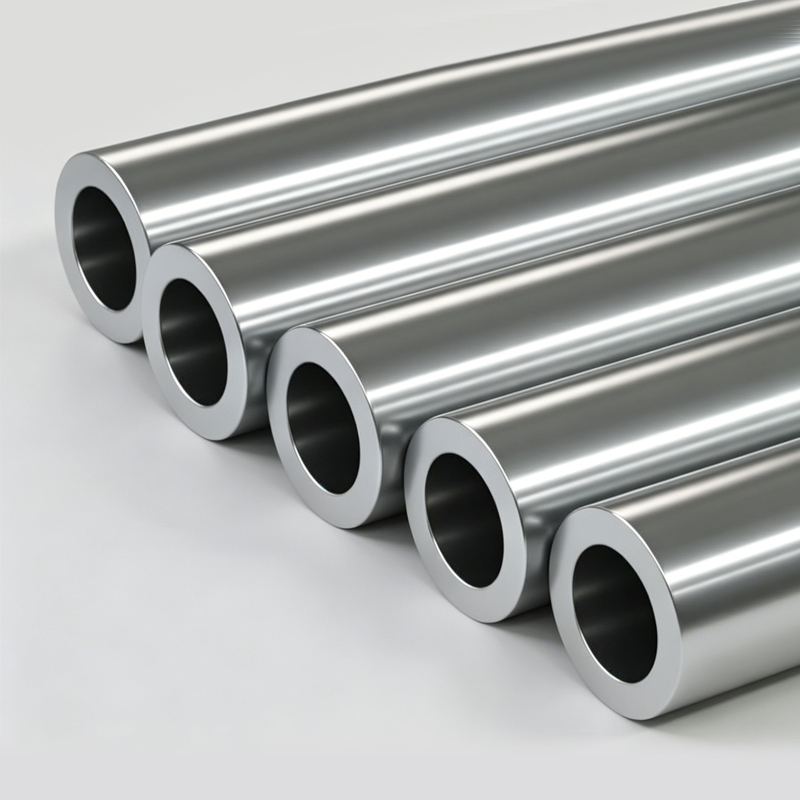
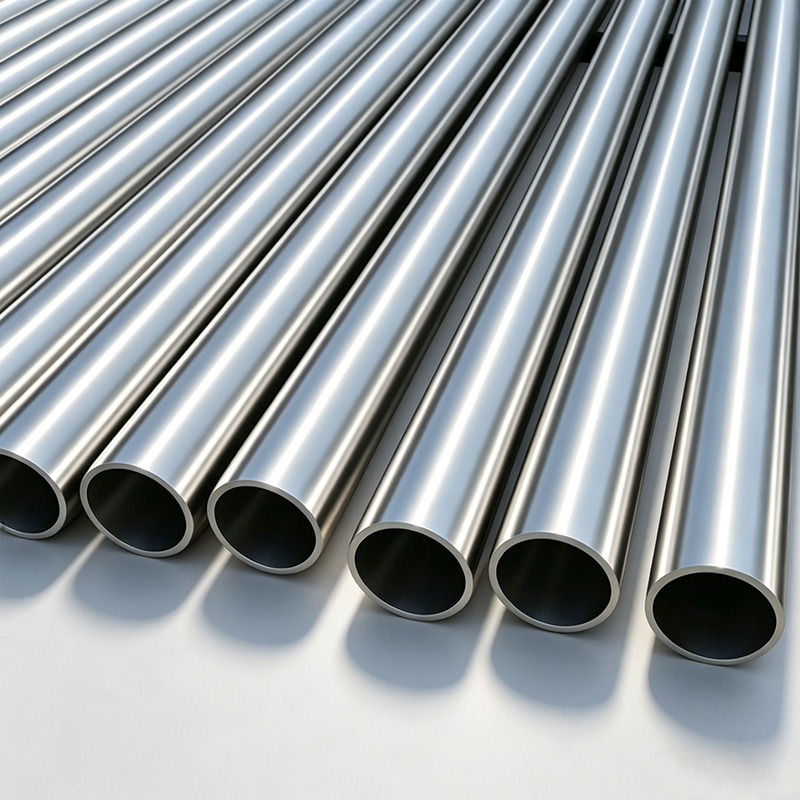
seamless stainless steel pipe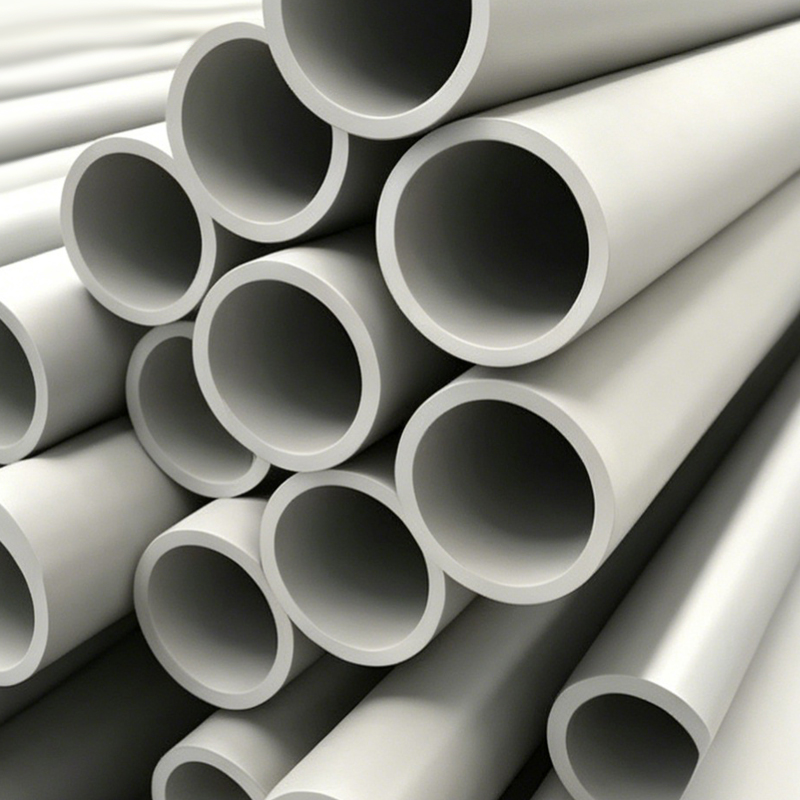
How Seamless and Welded Stainless Steel Pipes Are Manufactured
The performance difference between these two pipe types starts on the production floor, not in the pressure test lab.
Seamless Production Process
A solid round billet is heated and pierced through its center using a mandrel, then elongated and sized through a series of rolling mills. Because the tube is never cut and rejoined, the grain structure of the metal flows continuously around the circumference. This is the defining trait of seamless stainless steel pipe: uniform metallurgical integrity with no heat-affected zone from welding.
Welded Production Process
Flat stainless steel strip or plate is rolled into a cylindrical shape and the longitudinal edges are fused, typically using TIG, laser, or high-frequency induction welding. The weld bead is then ground flush and the pipe is heat-treated to relieve stress. Modern automated welding has made this seam far more reliable than older manual methods, but it still introduces a localized zone with different grain structure and, in many cases, a slightly reduced corrosion resistance if post-weld treatment is inconsistent.
Joint efficiency is the number that quietly decides how much pressure a pipe is actually allowed to carry — and it is where seamless and welded construction part ways.
Pressure Rating Comparison: Seamless vs Welded Stainless Steel Pipe
Pressure capacity is usually expressed through a joint efficiency factor applied in the pipe wall thickness formula. Seamless pipe is assigned a joint efficiency of 1.0, while welded pipe is commonly rated between 0.85 and 0.95 depending on inspection method (radiography, ultrasonic testing, or spot checks). This factor directly reduces the allowable working pressure of a welded pipe compared to a seamless pipe of identical outer diameter and wall thickness.
| Pipe Type | Typical Joint Efficiency | Common Pressure Range | Typical Use Case |
|---|---|---|---|
| Seamless stainless steel pipe | 1.0 | Up to 6,000+ psi | Boiler feedwater, hydraulic lines, high-pressure steam |
| Welded stainless steel pipe (fully radiographed) | 0.95 | Up to 2,500 psi | Process piping, moderate-pressure chemical transfer |
| Welded stainless steel pipe (spot-checked) | 0.85 | Up to 1,200 psi | Water distribution, low-pressure utility lines |
For a 4-inch schedule 40 pipe in grade 316L, this efficiency difference can translate into a real-world pressure rating gap of several hundred psi between seamless and welded construction at the same wall thickness — which is why high-pressure specifications so often call out seamless stainless steel pipe by name.
Wall Thickness, Tolerance, and Structural Uniformity
Beyond the weld seam itself, wall thickness consistency plays a major role in how a pipe behaves under pressure cycling. Seamless pipe production naturally produces some variation in wall thickness around the circumference because the piercing process is mechanical rather than formed from a flat sheet, but modern rolling mills keep this variation within tight, standardized tolerances (commonly ±12.5% under ASTM A312). Welded pipe, formed from strip of consistent starting thickness, often has more uniform wall thickness overall, but that uniformity does not compensate for the reduced strength at the seam itself.
- Seamless pipe resists fatigue better under repeated pressure cycling because there is no discontinuity for stress to concentrate around.
- Welded pipe can develop micro-fissures at the heat-affected zone over time if exposed to vibration or thermal cycling.
- Seamless pipe generally performs better in applications involving sudden pressure spikes, such as hydraulic systems or pressure relief lines.
- Welded pipe with full radiographic inspection can approach seamless-level reliability, but at added inspection cost.
Cost Comparison and Total Cost of Ownership
Seamless stainless steel pipe typically costs 20% to 40% more than welded pipe of the same size and grade, largely because the piercing and drawing process is more material- and energy-intensive than rolling and welding strip. For large-diameter, low-pressure runs, this cost gap can make welded pipe the more economical choice, since the pressure margin isn't being fully utilized anyway.
Info
Total cost of ownership tells a more nuanced story in high-pressure service. A pipe failure in a high-pressure system can mean unplanned shutdown, product loss, and in worst cases, safety incidents. When the upfront cost difference is weighed against the failure risk and inspection burden of welded pipe at high pressure, seamless stainless steel pipe often works out to be the lower-risk investment over a 15 to 20 year service life, even though it costs more at the point of purchase.
When Welded Stainless Steel Pipe Is an Acceptable Alternative
Seamless construction is not automatically the right answer for every project. Welded stainless steel pipe is a sound choice when:
- The system operates below roughly 1,000 to 1,500 psi and has a stable, non-cyclical pressure profile.
- Large diameters (above 12 inches) are needed, where seamless production becomes difficult and costly to source.
- Budget constraints require cost savings and the application allows for a lower joint efficiency rating.
- Full radiographic or ultrasonic inspection is feasible and specified, bringing weld reliability close to seamless performance.
In these cases, the practical performance gap between stainless steel seamless pipe and quality-inspected welded pipe narrows significantly, and welded pipe can be specified without meaningfully increasing risk.
Warning
Specifying welded pipe outside of these conditions — particularly in cyclical or safety-critical service — can leave a system with a materially lower safety margin than the design pressure assumes.
Key Considerations When Choosing Stainless Steel Seamless Pipe Suppliers
Not all seamless pipe delivers the same real-world performance, since manufacturing quality varies widely between mills. When evaluating seamless stainless steel pipe suppliers, buyers should look closely at a few specific factors rather than relying on grade designation alone.
Mill Certification and Traceability
Reliable stainless steel seamless pipe suppliers provide mill test certificates (MTCs) showing chemical composition, mechanical properties, and heat number traceability for every batch. This documentation is essential for verifying that the pipe meets the specified ASTM or EN standard before it is installed in a high-pressure system.
Non-Destructive Testing Capability
Even seamless pipe can contain internal flaws from the piercing process, such as laminations or inclusions. Suppliers with in-house ultrasonic or eddy current testing catch these defects before shipment, rather than leaving detection to the buyer's incoming inspection.
Dimensional Consistency
Wall thickness and outer diameter tolerance should be checked against a recognized standard such as ASTM A312 or A213. Consistent dimensions matter more in high-pressure service because thin spots reduce the effective pressure rating of the entire pipe run, not just the affected section.
Success
A supplier that can produce mill certificates, NDT reports, and dimensional inspection data on request is, in practice, the strongest signal of consistent pipe quality — stronger than price or grade name alone.
Final Recommendations for High-Pressure Piping Systems
For pressures above roughly 1,500 psi, cyclical loading, or safety-critical service, seamless stainless steel pipe remains the more reliable specification due to its 1.0 joint efficiency and absence of a weld seam. For moderate-pressure, large-diameter, or budget-sensitive projects, well-inspected welded stainless steel pipe is a defensible alternative that narrows the performance gap considerably.
Danger
Whichever type is specified, the outcome depends heavily on sourcing from qualified stainless steel seamless pipe suppliers or welded pipe manufacturers who provide full material traceability and testing documentation. A correctly rated pipe from a poorly controlled mill can underperform its own specification, so supplier qualification should be treated as seriously as the seamless-versus-welded decision itself.
In short: let pressure, cycling, and diameter drive the seamless-versus-welded decision, and let certification and testing capability drive the supplier decision. Getting both right is what actually determines how a high-pressure system performs over its service life.